
Supreme Court Emphasizes Respectful Language in Political Discourse
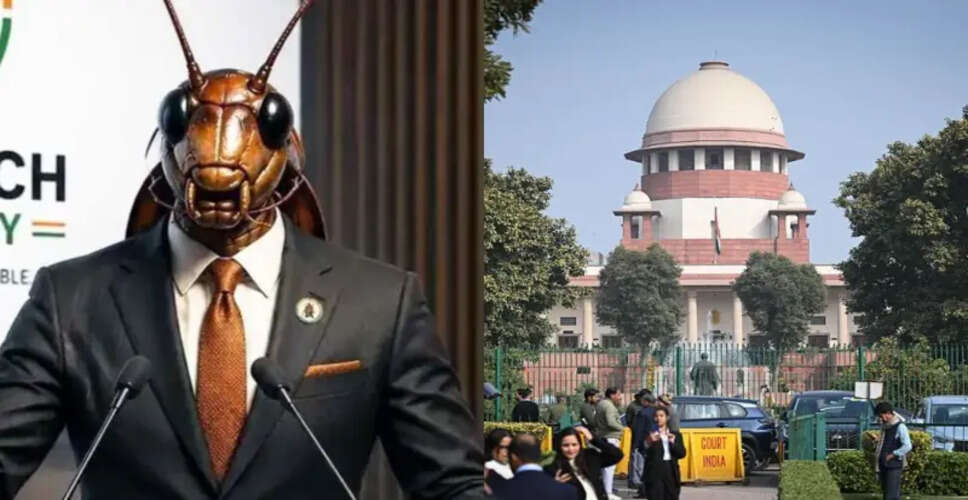

Supreme Court's Stance on Political Language
During a recent hearing regarding a political comment, Chief Justice Surya Kant expressed strong views on the necessity of maintaining decorum in public life and politics. The court addressed a controversial statement that allegedly referred to a political party as the 'Cockroach Public Party.' The court raised serious concerns, stating that while dissent and criticism are acceptable in a democracy, derogatory language is never justified.
Justice Surya Kant remarked that political rivalry is an inherent aspect of democracy, yet it is crucial for leaders and public figures to exercise restraint in their choice of words. He clarified that such remarks foster hatred and bitterness in society, undermining the dignity of political discourse. The court emphasized that debates in a democratic framework should be based on facts and ideas, rather than personal insults or jibes.
This commentary from the court comes at a time when political rhetoric in the country is becoming increasingly aggressive. Personal attacks and offensive language among leaders on social media and public platforms have become commonplace. In this context, the Supreme Court's remarks are considered significant. Legal experts suggest that the court has indirectly conveyed to political parties and leaders that freedom of expression does not equate to insulting others.
The court also indicated that a decline in the quality of political discourse could erode public trust in democratic institutions. Justice Surya Kant noted that while the Constitution grants everyone the right to speak, this freedom comes with responsibilities. He urged individuals in public life to act in ways that promote a positive message within society.
The parties involved in the case presented their arguments in court. One side claimed the statement was intended as political satire, while the other deemed it offensive and contrary to democratic values. After hearing both sides, the court reiterated the importance of using measured language.
Political analysts believe that the Supreme Court's remarks will serve as a moral reminder for political parties in the future. During election seasons, the level of rhetoric often declines, leading leaders to make personal comments about one another. Thus, the court's assertion that 'maintaining linguistic decorum is essential' is seen as a crucial signal regarding political culture.
Following this incident, discussions have intensified on social media. Many have supported the court's comments, advocating for healthy dialogue in politics, while others have linked it to freedom of expression, presenting differing opinions. However, the majority of responses highlighted that while criticism is vital in a democracy, it should be expressed in a civil and responsible manner.
The Supreme Court's statement has once again raised the question of whether the standard of dialogue in Indian politics is continuously declining. The message from the court is clear: regardless of how intense political competition may become, the dignity of democracy and the decorum of language must always be upheld.