
Supreme Court Dismisses Plea for Rotational Reservation of SC/ST Constituencies
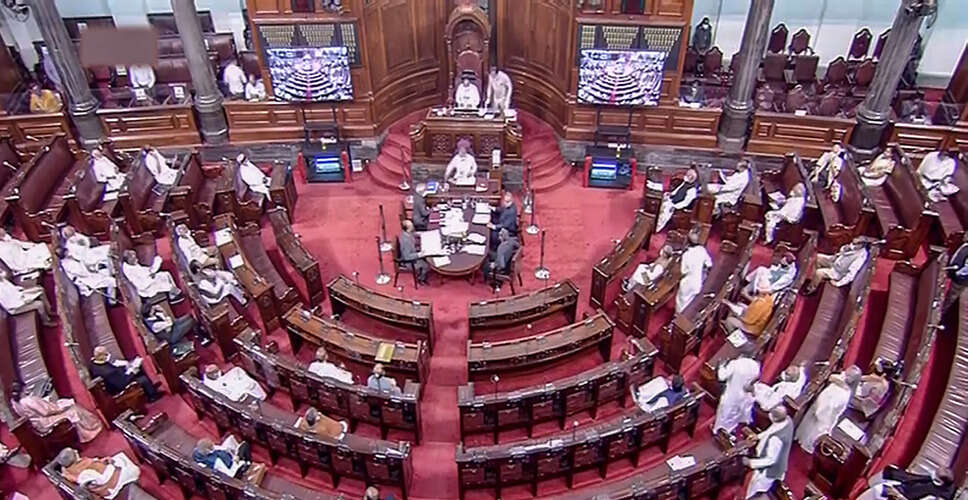

Supreme Court's Ruling on Constituency Reservations
New Delhi: On Wednesday, the Supreme Court declined to consider a petition that called for the mandatory rotation of constituencies reserved for Scheduled Castes (SCs) and Scheduled Tribes (STs) in both Parliament and state assemblies. The court stated that such matters fall under the legislative domain and are not within the purview of judicial orders.
A bench led by Chief Justice Surya Kant, along with Justices Joymalya Bagchi and V Mohana, upheld the Allahabad High Court's decision regarding Section 9(1)(c) of the Delimitation Act, 2002. This section outlines the identification of reserved constituencies in regions with a higher concentration of SC/ST populations.
The petitioner, Jagdish Singh, a voter from the 191-Kadipur Assembly Constituency in Sultanpur, Uttar Pradesh, argued against the long-standing reservation of his constituency for SCs, which has persisted for nearly seventy years since its establishment.
He claimed that the lack of a rotation system infringed upon Articles 14, 15, and 19 of the Constitution, limiting voters' choices by restricting candidates to those from the SC community.
Singh asserted that the current arrangement primarily benefits a select few political families rather than serving the broader community's interests.
He sought a rotational reservation mechanism akin to that used for panchayats and municipalities under Articles 243D and 243T of the Constitution, urging the court to mandate periodic rotation of SC/ST reserved constituencies.
During the proceedings, Justice Bagchi remarked that in a multiparty democracy, voters should base their electoral decisions on political ideologies rather than caste or religion.
He emphasized that in a political democracy, various parties with differing ideologies exist, and voters should support parties based on their beliefs rather than the religion of the candidates. This perspective undermines the petitioner's argument, Justice Bagchi noted.
The bench clarified the distinction between the right to vote and the right to contest elections from specific constituencies, indicating that candidates from the general category can still run in non-reserved constituencies.
The Chief Justice pointed out that the petitioner had approached the incorrect forum for policy changes, suggesting that such demands should be directed to Parliament.
In a light-hearted comment, the Chief Justice suggested that the petitioner could also consider raising the issue through public protests.
The challenge to Section 9(1)(c) of the Delimitation Act was ultimately rejected. The petitioner argued for a rotational reservation system for ST and SC communities similar to that in municipal corporations.
The High Court dismissed this argument, stating that while rotation is ideal, it cannot be mandated by the court and is a matter for Parliament to decide. The bench concluded that there was no basis for a different interpretation and encouraged the petitioner to engage with public representatives to advocate for the rotation principle.