
Supreme Court Dismisses Plea for Independent Probe into Jantar Mantar Protests
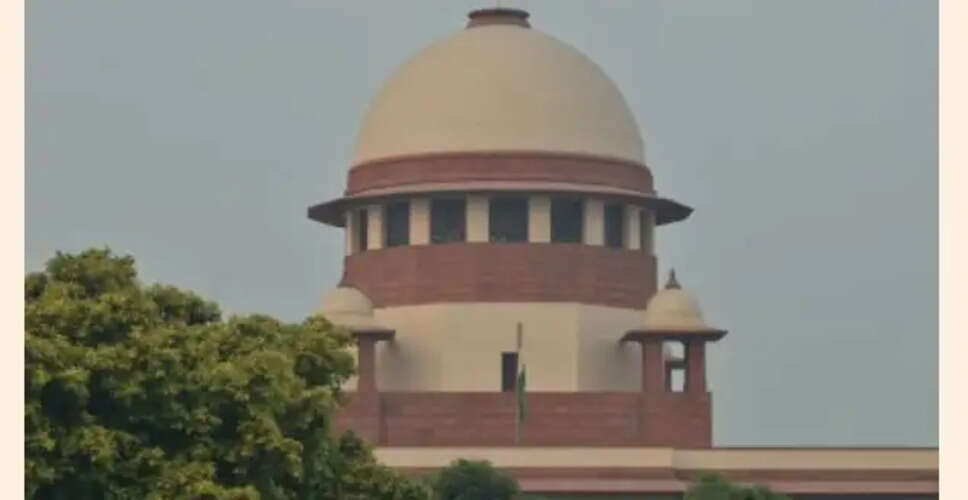

Supreme Court's Ruling on Protest Investigation
New Delhi: On Friday, the Supreme Court dismissed a request for the Centre, Delhi government, and police to conduct an impartial investigation into the Cockroach Janta Party's protest at Jantar Mantar that took place in July.
The protest, organized by the Cockroach Janta Party (CJP) in response to the NEET paper leak, led to the resignation of Dharmendra Pradhan from his position as Union education minister.
Additionally, the court declined to acknowledge a request asserting that police should operate independently, similar to the judiciary, in maintaining law and order and investigating crimes without external interference unless their actions violate the law.
A bench led by Chief Justice of India (CJI) Surya Kant, along with Justices Joymalya Bagchi and V Mohana, reviewed the plea related to FIRs filed concerning the protests at Jantar Mantar.
The petition included the Centre, the Commissioner of Police, the Delhi government, Shailendra Mani Tripathi (one of the PIL petitioners), and CJP leader Abhijeet Dipke as respondents.
Advocate Mathews Nedumpara, representing petitioner L Ramanathan, raised concerns about the validity of the PIL, questioning the need for judicial intervention without actual litigants present.
He remarked that individuals were treating the court as if it were their personal domain.
In response, the CJI defended the court's choice to invoke Article 142 of the Constitution to dismiss certain FIRs.
"We cannot guarantee that every order we issue is flawless. You argue against our use of Article 142 to quash FIRs... please understand, these are young students. We must consider their families and futures. We do not wish for them to face court proceedings... You have not reviewed our orders regarding members of the legislative assembly or Parliament," the bench stated.
The CJI referenced a situation in Himachal Pradesh where politicians staged a dharna, resulting in damage to public property.
"During the Covid crisis, the citizens of this country were unprepared for such challenges... thus, they reacted as best they could. The High Court refused to quash the FIRs, but we permitted it, stating they are not hardened criminals," he explained.
The bench noted that the plea aimed to review the order that quashed FIRs under Article 142 of the Constitution.
The petition sought to affirm that police possess an independent authority in maintaining law and order, investigating crimes, and ensuring justice, akin to the judiciary's independence.
It argued that just as the executive cannot interfere with judicial functions, police operations should remain free from interference unless they act unlawfully or with malicious intent, which may require resolving disputed factual issues.
"We request a writ, order, or direction in the nature of mandamus to compel Respondent Nos. 1 to 3 (Centre, Delhi government, city police) to ensure that the investigation into the FIRs related to the Jantar Mantar protests is conducted independently, fairly, and in accordance with the law," the plea concluded.