
Supreme Court Dismisses PIL to Include Political Parties Under Anti-Sexual Harassment Law
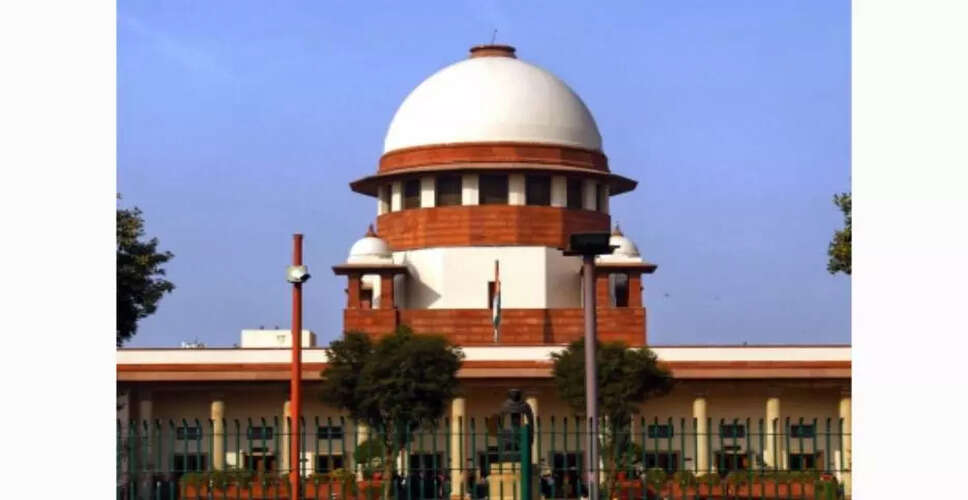
Supreme Court's Decision on Political Parties and Sexual Harassment Law
New Delhi, Aug 1: The Supreme Court has recently rejected a public interest litigation (PIL) that aimed to extend the anti-sexual harassment legislation to political parties.
The bench, led by Chief Justice of India (CJI) B.R. Gavai and Justice K. Vinod Chandran, stated, “This is a matter for Parliament. We cannot intervene as it pertains to policy.”
Senior advocate Shobha Gupta, representing the petitioner, clarified that she was not advocating for a new law but rather an interpretation that would include political parties under the Sexual Harassment of Women at Workplace (Prevention, Prohibition and Redressal) Act, 2013, commonly referred to as the ‘POSH Act’.
Gupta highlighted a ruling from the Kerala High Court, which determined that political parties are not legally obligated to form an Internal Complaints Committee under the POSH Act due to the absence of an employer-employee relationship among party members. She contended that this issue should not be solely viewed as a legislative matter.
In response, the CJI suggested that Gupta should file a special leave petition to contest the Kerala High Court's ruling independently.
Subsequently, Gupta opted to withdraw the PIL, which the court permitted. The Supreme Court dismissed the petition as withdrawn while allowing the petitioner to pursue legal avenues as advised.
Previously, in December, the Supreme Court had addressed a similar petition, directing the petitioner to approach the Election Commission of India (ECI), asserting that the ECI was the appropriate authority to encourage recognized political parties to implement internal mechanisms for addressing sexual harassment complaints.
The court had stated, “If the petitioner’s concerns are not adequately resolved, she may seek judicial recourse as per the law.”
According to the latest PIL, the petitioner submitted a representation to the ECI in March, but has yet to receive a response.
The PIL requested a declaration that political parties must adhere to the procedures outlined in the Sexual Harassment of Women at Workplace (Prevention, Prohibition and Redressal) Act, 2013.
It urged the Supreme Court to broaden the scope of the POSH Act to encompass political party workers, ensuring accountability for political parties in providing a safe working environment and safeguarding individuals associated with political parties from sexual harassment.
The PIL included several political parties in its memo, such as the Congress, Bharatiya Janata Party, CPI(M), CPI, Trinamool Congress, Nationalist Congress Party, National People’s Party, Bahujan Samaj Party, and Aam Aadmi Party.