
Supreme Court Dismisses PIL for Ethanol Disclosure at Petrol Pumps

Supreme Court's Decision on Ethanol Labelling
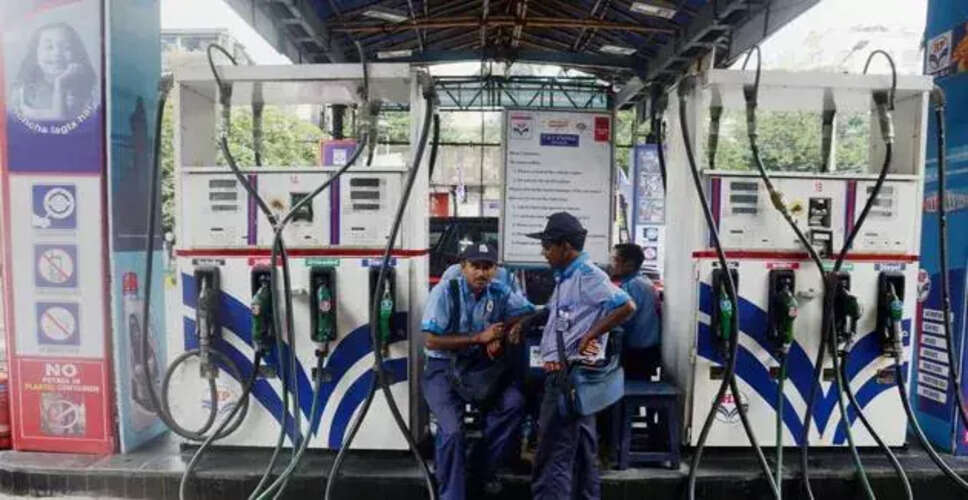
File image of a petrol pump. (Photo:PTI)
New Delhi, Aug 31: The Supreme Court has declined to consider a Public Interest Litigation (PIL) that requested a mandate for uniform labelling on petrol dispensing nozzles, specifically indicating the ethanol content in petrol.
A bench comprising Justices MM Sundresh and PB Varale stated that the PIL would not be entertained under Article 32, which allows direct access to the Supreme Court. The petitioner, Narendra Kumar Goswami, was advised to seek relief from the appropriate high court.
Attorney General R Venkataramani, representing the Centre, argued that the petition was a form of proxy litigation, as a similar case had already been dismissed by the court.
According to the AG, "The petitioner expects the Government of India to respond to his demands."
Goswami asserted his right to be informed about the petrol's composition at fuel stations, emphasizing that this information should be accessible to all citizens.
The bench encouraged Goswami, who represented himself, to present his arguments in the high court.
Goswami's petition also requested that every fuel invoice clearly state the ethanol percentage in the petrol sold.
Additionally, he urged the respondents to create and publish a searchable database detailing vehicle compatibility with various ethanol blends, categorized by manufacturer, model, engine type, and year.
His plea called for the establishment of an independent expert committee, including representatives from the ministries of petroleum and natural gas, road transport and highways, and the Bureau of Indian Standards, along with independent automobile engineers. This committee would assess and report on the compatibility of E20 fuel with existing vehicles.
The petition further requested an evaluation of the effects on fuel efficiency, engine durability, maintenance costs, warranty and insurance implications, as well as the environmental impact, including emissions and water usage associated with ethanol production, and concerns regarding food security and feed diversion linked to the blending program.