
Supreme Court Dismisses Petition Against Vande Mataram Advisory
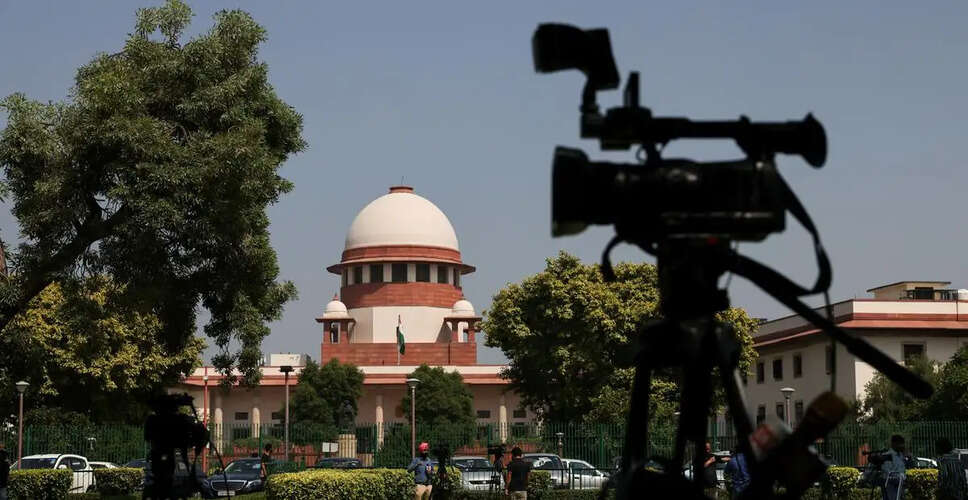
Supreme Court's Ruling on Vande Mataram
On Wednesday, the Supreme Court rejected a petition that challenged the Union government's advisory regarding the performance of all six stanzas of the patriotic song Vande Mataram during government and public events.
A bench led by Chief Justice Surya Kant, alongside Justices Joymalya Bagchi and Vipul Pancholi, reviewed the writ petition submitted by Muhammed Sayeed Noori, who operates an educational institution.
Noori contested a circular issued by the Ministry of Home Affairs on January 28, which mandated that Vande Mataram be sung in its entirety before the national anthem, Jana Gana Mana.
Previously, only the first two stanzas of Vande Mataram were performed at official events, while the remaining stanzas, which reference Hindu deities such as Durga, Lakshmi, and Saraswati, were excluded.
The petitioner's attorney argued that the advisory could create social pressure, potentially leading to discrimination against those who choose not to participate.
It was contended that individuals from various religious backgrounds, including atheists, might feel compelled to sing the song as a demonstration of loyalty, emphasizing that patriotism should not be enforced.
During the hearing, the Supreme Court deemed the petition 'premature' and based on 'vague apprehensions'. The bench noted that the advisory does not impose mandatory singing nor does it outline penalties for non-compliance.
The court stated, 'We will address this matter when there are penalties or if it becomes mandatory.'
Vande Mataram, composed in Sanskrit by Bankim Chandra Chatterjee in 1875, is a significant patriotic song associated with India's independence movement.
A note from the Press Information Bureau, released on November 6 to commemorate the song's 150th anniversary, highlighted that the Constituent Assembly recognized Jana Gana Mana as the national anthem and Vande Mataram as the national song.
Rajendra Prasad, the first president, remarked in January 1950 that Vande Mataram, due to its historical significance, 'shall be honored equally with Jana Gana Mana and shall have equal status with it.'
However, the Constitution only officially recognizes the national anthem, omitting Vande Mataram.