
Supreme Court Dismisses FIRs Against Student Protesters Nationwide

Supreme Court's Landmark Decision
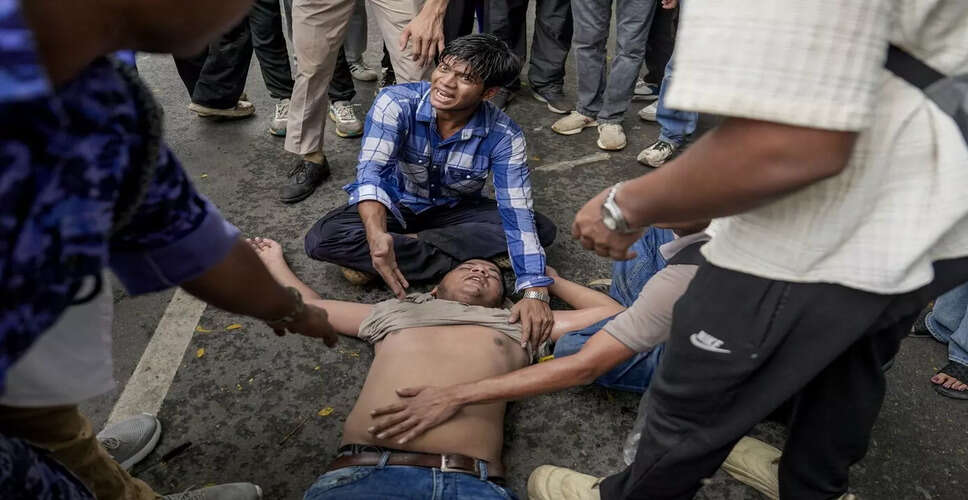
File image of protesters injured during the 'Sansad Chalo' protest march in New Delhi. (Photo:PTI)
New Delhi, Sep 1: On Tuesday, the Supreme Court annulled FIRs filed against student demonstrators in Delhi, Bihar, Maharashtra, West Bengal, and Assam, related to protests that occurred from July 20 to 25. The court also mandated that similar cases across the nation should not be pursued or investigated.
A bench led by Chief Justice of India (CJI) Surya Kant, along with Justices Joymalya Bagchi and V. Mohana, utilized its exceptional powers under Article 142 of the Constitution to terminate the criminal proceedings. This decision was made considering the “future prospects of the young protesters” involved in the demonstrations.
“In light of the future prospects of the young protesters who participated in a peaceful demonstration to voice their demands, we find it fitting to invoke our powers under Article 142 of the Constitution to ensure complete justice,” stated the Supreme Court.
The CJI-led bench clarified that while the Centre, through Delhi Police and the state governments of Bihar, West Bengal, Maharashtra, and Assam, had filed applications to quash the FIRs, the benefits of this ruling would apply nationwide.
The apex court further instructed that no new FIRs should be filed by any State or Union Territory concerning incidents related to the protests during the specified period.
However, the Supreme Court allowed Delhi Police to file a single FIR against 2,873 individuals who were present at the Jantar Mantar protests and were reported to have serious criminal backgrounds. This FIR would be limited to allegations of bodily harm and property damage.
Additionally, the Supreme Court directed the Centre to develop a nationwide policy for compensation payments within three months, in consultation with the relevant state governments.
“The Union of India is to create a policy regarding compensation payments on a national scale. This policy should be shared with all relevant state governments and implementing authorities to establish a consistent mechanism for compensation,” the court ordered.
Following the Solicitor General's submissions, CJP co-convener Saurav Das, present in the Supreme Court, announced that the party would withdraw its planned protest march on September 5, in light of the Union government's assurances and the Supreme Court's ruling.
This development occurred shortly after the Centre approached the Supreme Court to quash FIRs against student protesters involved in demonstrations at Jantar Mantar and other locations, requesting the court to exercise its extraordinary powers under Article 142 for “complete justice.”
Earlier, on Monday, the Supreme Court had declined to issue any interim order against the planned September 5 protest march, noting that there were no compelling reasons at that time to believe that the demonstration would lead to law and order issues.