
Supreme Court Discusses Sedition Law Amid Legislative Changes
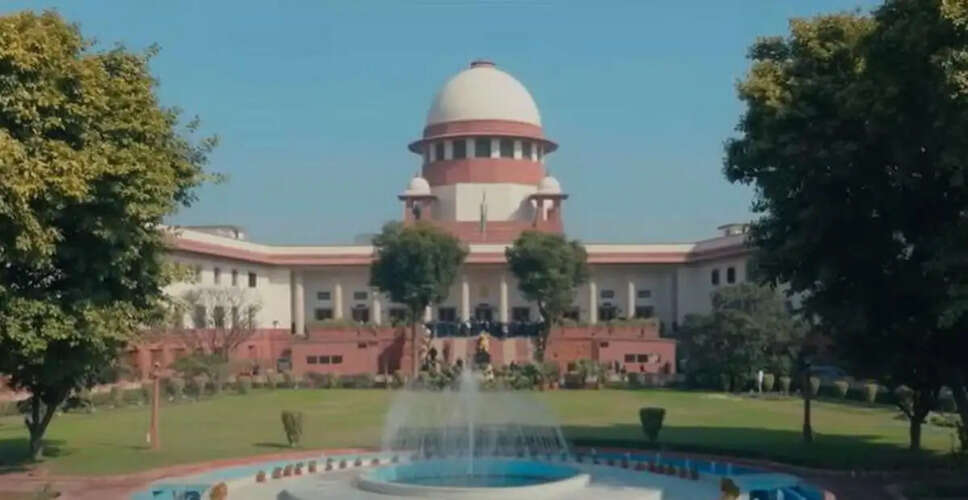
Supreme Court's Observations on Sedition Law
On Friday, the Supreme Court remarked that the Union government's commitment to reconsider the sedition offense under the Indian Penal Code does not prevent Parliament from including it in the Bharatiya Nyaya Sanhita, according to reports.
A bench led by Chief Justice Surya Kant and Justice Joymalya Bagchi highlighted the independence of the legislature from the executive while hearing public interest litigation challenging various provisions of the Bharatiya Nyaya Sanhita, particularly Section 152.
This section addresses actions that threaten India's sovereignty, unity, and integrity, criminalizing a broad range of expressive conduct, including attempts to incite secession or rebellion.
Critics argue that this provision essentially reinstates the colonial-era sedition law found in Section 124A of the Indian Penal Code, claiming that it has been reintroduced under the guise of Section 152 with the enactment of the Bharatiya Nyaya Sanhita in July 2024.
Petitioners referenced a prior commitment from the Union government to the Supreme Court in May 2022, which stated that Section 124A would be reviewed, leading to a suspension of sedition prosecutions.
During the hearing, advocate Menaka Guruswamy, representing one of the petitioners, pointed out the contradiction of the Union government stating it would withdraw the sedition offense while it remains in Section 152.
Guruswamy emphasized that the government cannot make such commitments and then reintroduce the offense.
However, the bench rejected this argument, asserting that the Union government's undertaking does not constrain the legislature.
“Parliament is not bound by the government’s undertaking,” the bench stated, emphasizing that the legislature retains the authority to enact laws independently.
While Parliament's legislative power is separate from the executive, it is the judiciary's role to assess whether such laws adhere to constitutional standards.
The bench noted that the provisions of the Bharatiya Nyaya Sanhita are functioning effectively at present.
“Over time, we will identify which provisions may pose challenges and whether they require judicial resolution or legislative action,” the court added.
The case is scheduled for further hearings in March.