
Supreme Court Directs States to Enhance ICU Standards: A New Era for Healthcare
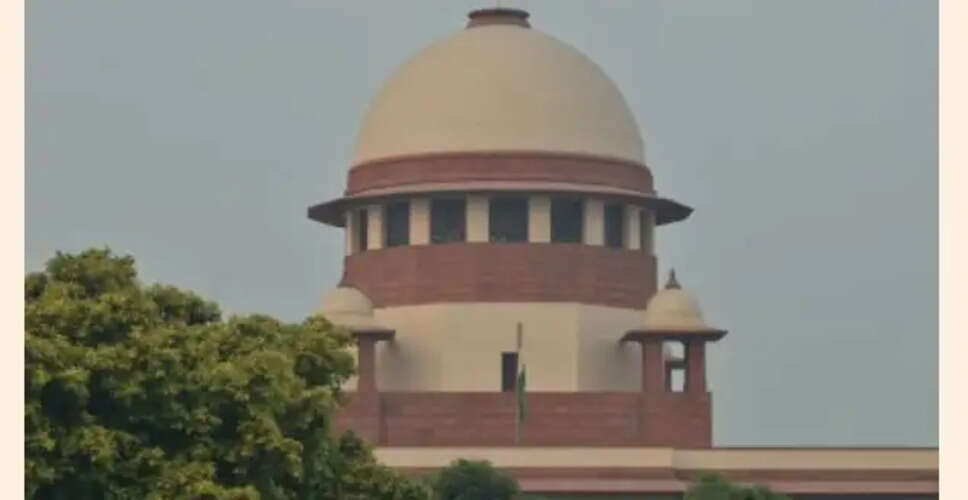

Supreme Court's Directive on ICU Guidelines
New Delhi: The Supreme Court has mandated that all states and Union Territories develop a feasible and actionable plan to implement essential guidelines for intensive care units (ICUs).
The court was briefed that a consensus has been reached on the Guidelines for Organisation and Delivery of Intensive Care Services, which are deemed practical and necessary as a baseline standard for ICUs.
A bench comprising Justices Ahsanuddin Amanullah and R Mahadevan instructed that these guidelines be distributed to all states and UTs.
As an immediate step, the court directed that additional chief secretaries overseeing health and medical education in the states and UTs convene a meeting with relevant experts to formulate an actionable plan for these guidelines. This plan must be both realistic and practical, as emphasized in the court's order dated April 20.
The Supreme Court was addressing issues related to healthcare services, particularly focusing on ICU patient treatment protocols.
The bench highlighted the need to identify and prioritize five fundamental issues initially.
The challenge lies in defining what should be considered absolutely essential and mandatory; thus, an initial list of five critical requirements regarding manpower and equipment logistics should be compiled.
Additionally, a methodology for practical implementation must be developed, along with a system to ensure compliance and monitor the execution.
The court expects this process to begin immediately, with the first meeting scheduled within a week. Attendance is required from the relevant additional chief secretary and secretary overseeing health and medical education in the states and UTs.
Reports generated from these discussions should be sent to the Secretary of the Department of Health, Government of India, who will then circulate them to all states and UTs.
Following this, a meeting should be organized to finalize a common draft that will be circulated.
A comprehensive report with recommendations is to be prepared and presented to the court at the next hearing, with the entire process expected to be completed within three weeks.
The Ministry of Health, Government of India, is instructed to formally issue the guidelines discussed today to the relevant states and UTs as an advisory, with a copy also made available on the Ministry's website, as stated by the bench, which has scheduled further hearings for May 18.
During the proceedings, it was proposed that nursing staff receive training to manage such situations effectively, as they are present with patients continuously, unlike doctors who may only visit periodically.
The bench fully supported this suggestion, recognizing its practicality and necessity. Consequently, the Indian Nursing Council and the Para Medical Council of India have been included as respondents in this matter.
At the next hearing, these newly added respondents are expected to present a plan detailing how they intend to enhance the courses or training programs they offer, ensuring that graduates from their institutions are equipped to handle ICU situations.