
Supreme Court Directs JioStar to Approach Delhi High Court Over Regulatory Framework

Supreme Court's Directive to JioStar India
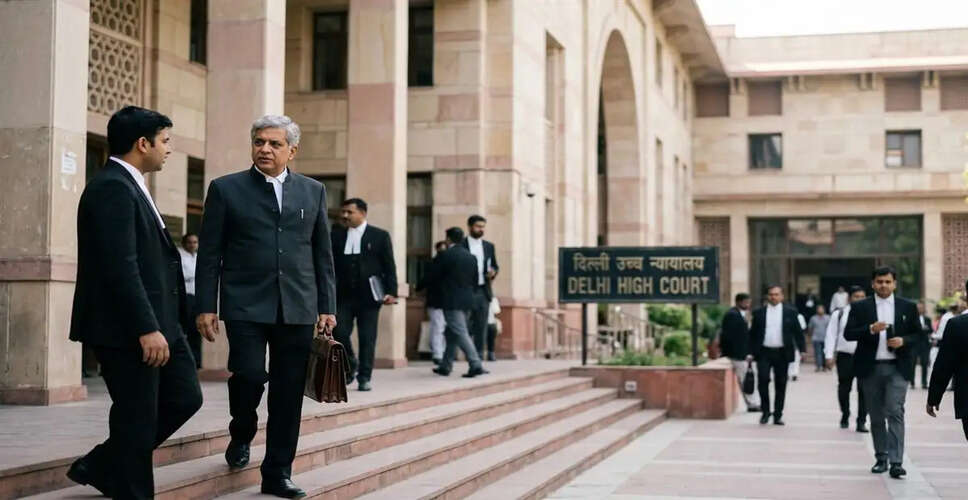
New Delhi, August 4 - The Supreme Court instructed JioStar India Private Limited on Tuesday to approach the Delhi High Court without any amendments regarding its petition challenging certain aspects of the regulatory framework presented by the Telecom Regulatory Authority of India (TRAI) concerning television channel fees. The bench, comprising Chief Justice Suryakant, Justice Joymalya Bagchi, and Justice V. Mohan, advised senior advocate Mukul Rohatgi to take the matter to the High Court. The bench dismissed the transfer petition filed by JioStar India Private Limited.
The broadcaster had approached the Supreme Court through the law firm Karanjawala & Company. The bench was hearing two petitions related to TRAI's regulatory framework, which included issues such as fee orders, Maximum Retail Price (MRP) limits, and the discount structure related to cable and DTH distribution.
Rohatgi, representing JioStar, argued that the TRAI's rules and fee orders were 'intrinsically linked and interrelated,' despite originating from different authorities. He clarified the distinction between the two, stating that the rules fall under the legislative authority and can only be challenged in the High Court, while the fee orders are administrative in nature and fall under the jurisdiction of the Telecom Disputes Settlement and Appellate Tribunal (TDSAT).
He stated, 'The fee orders and regulatory framework were issued together. One was under legislative power, and the other under administrative power.' Rohatgi referenced the definition of 'subscriber' under this framework, arguing that regulations categorize luxury hotels with hundreds of television sets and single-room residences in the same bracket for fee determination. He emphasized, 'If a hotel charges ₹50,000 per room, there should be a distinction between commercial use of signals and home use.'
He added, 'The same fee cannot apply to both. It's like comparing apples and oranges.' JioStar had previously filed petitions in the Delhi High Court in 2014 and 2015, challenging both the rules and fee orders. These petitions remained pending due to similar issues already being considered by the Supreme Court in ongoing proceedings before TDSAT.
Despite the broadcaster's assertion that no changes were necessary, the High Court inexplicably directed amendments to the petition and imposed a fine. Rohatgi repeatedly questioned, 'Why the litigation costs?' and suggested that the order indicated the court had already formed an opinion that the petitions would be dismissed if not amended. The court instructed the broadcaster to take the petition to the High Court.
The Chief Justice remarked, 'It would be better for you to go back. File a petition in the High Court referring to paragraphs 4 and 5 of the interim order and state that you do not wish to make any changes to your petition.' The senior advocate confirmed that the broadcaster would withdraw the transfer petition and file an appropriate application in the High Court.