
Supreme Court Denies Early Intervention in West Bengal Voter List Dispute
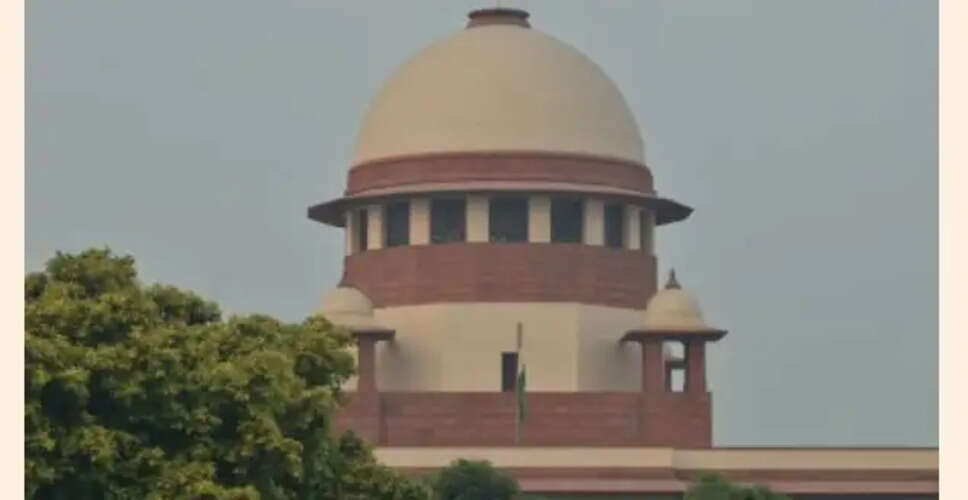

Supreme Court's Ruling on Voter List Appeals
New Delhi: On Monday, the Supreme Court dismissed a request from a group of 13 individuals who sought its intervention regarding the removal of their names from the voter list during the Special Institutional Revision (SIR) in West Bengal, where the first phase of assembly elections is scheduled for April 23.
The bench, led by Chief Justice Surya Kant and Justice Joymalya Bagchi, deemed the petition 'premature' and advised the concerned parties to approach the designated appellate tribunals instead.
The court noted, 'Since the petitioners (Quaraisha Yeasmin and others) have already approached the appellate tribunals... we believe the concerns raised in the petition are premature. If the plea is granted, necessary consequences will follow,' while clarifying that it had not commented on the merits of the case.
The petition claimed that the Election Commission was hastily removing names without adhering to proper procedures, and that appeals against these removals were not being addressed promptly.
The Chief Justice of the Calcutta High Court has established 19 tribunals, led by former High Court chief justices and judges, to handle appeals regarding the removal of names from voter lists.
Senior advocate D S Naidu, representing the election authority, informed the court that there are currently around 30 to 34 lakh pending appeals. 'Each tribunal is now managing over one lakh appeals,' the bench remarked.
The counsel for the petitioners argued that the Election Commission had not provided necessary orders to the relevant judicial bodies and suggested that the 'freezing date' for the electoral rolls should be postponed.
'If I am not permitted to present my case, what is the point? Will these appeals be resolved in a timely manner or just indefinitely extended?' the counsel questioned.
During the proceedings, Justice Bagchi highlighted the importance of the electoral process, stating that the right to vote is not merely a constitutional obligation but a 'sentimental' cornerstone of democracy.
'The right to vote in your homeland is not just constitutional; it is sentimental. It signifies participation in democracy and the election of a government,' he remarked.
However, he cautioned that the tribunals, staffed by former judges, should not be overwhelmed by imposing strict timelines for decisions.
'It is not the end that justifies the means, but the means that justify the end,' Justice Bagchi stated.
'We must safeguard due process rights. Voters should not be caught between two constitutional authorities,' he added, indicating that the court would not disrupt the electoral process at this juncture.
Justice Bagchi acknowledged that the Chief Justice of the Calcutta High Court had already outlined the procedures for appeals, which commenced on Monday.
'Unless a significant number of voters are excluded or it materially impacts the election... the election cannot be annulled,' the bench concluded, emphasizing that judicial intervention aims to 'facilitate elections, not obstruct them.'
The Chief Justice underscored that the petitioners must exhaust their options before the appellate tribunals.
The assembly elections in West Bengal are set to take place in two phases on April 23 and 29, with vote counting scheduled for May 4.