
Supreme Court Denies Bail to Umar Khalid and Sharjeel Imam in Delhi Riots Case
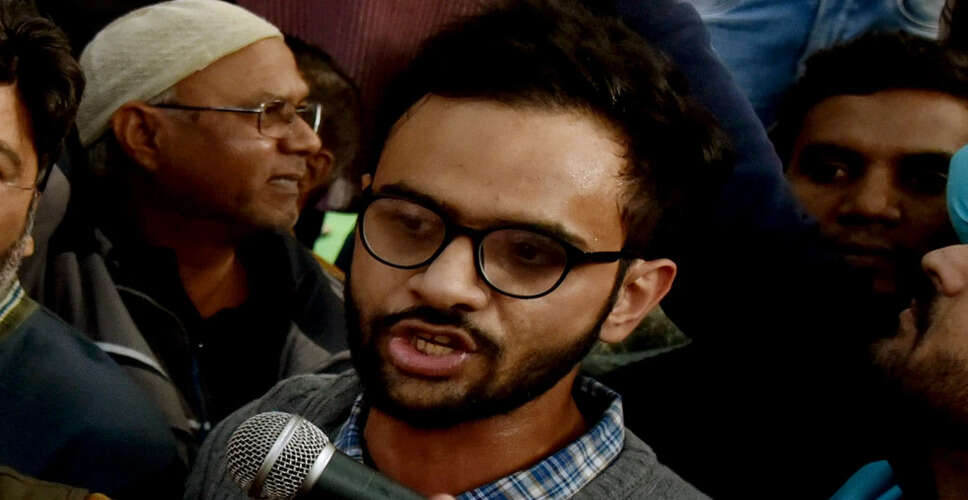
Supreme Court's Ruling on Delhi Riots Case
On Monday, the Supreme Court dealt a significant blow to Umar Khalid and Sharjeel Imam, who are accused in the 2020 Delhi riots conspiracy case, by rejecting their bail applications. The bench highlighted that the roles of these two defendants were "distinct and serious" compared to other co-accused individuals facing trial. However, the court granted bail to five other defendants, providing some relief in a case that has remained politically and legally sensitive for nearly four years.
Court's Justification for Denial of Bail
In its order denying bail to Umar Khalid, the Supreme Court clarified that prolonged delays in trials cannot serve as grounds for granting bail. The court also denied bail to co-accused Sharjeel Imam, emphasizing that granting bail does not imply any weakening of the charges against them. Meanwhile, other accused, including Gulfiya Fatima, Meeran Haider, Mohammad Sameer Khan, Shadab Ahmed, and Shifa Ur Rehman, were granted bail.
Conditions for Bail Granted
The court stressed that the granting of bail does not indicate any diminishment of the charges. The accused will be released on bail under approximately 12 conditions. It was further stated, "If any of these conditions are violated, the trial court may revoke the bail after giving the accused an opportunity to be heard." In its ruling, the court considered the factual background and the prosecution's statements, as well as issues related to prolonged incarceration, the scope of UAPA, and other relevant factors.
Legal Implications and Rights
The Supreme Court clarified that it did not make an abstract comparison between law and the constitution. Instead, the precise question was how courts should assess bail applications under UAPA when delays in prosecution are cited. The court reaffirmed that the right to a speedy trial is recognized under the constitution. It stated, "Delay in prosecution cannot be considered a punishment, and deprivation of liberty should not be arbitrary." However, in cases related to national security allegations, delays cannot serve as a "trump card" but may enhance judicial scrutiny.
Evaluating Each Accused's Role
The court further emphasized that when considering bail, the role of each accused must be examined in the context of the conspiracy or activities charged under UAPA. Consequently, the general assessment of liberty differs in cases that threaten the foundation of the state, necessitating a careful judicial evaluation of each accused's role under the relevant provisions of UAPA.
Names of the Five Accused Granted Bail
The five individuals who were granted bail include:
Background of the Delhi Riots Case
Umar, Sharjeel, and several others have been accused of being the "masterminds" behind the February 2020 riots under the Unlawful Activities (Prevention) Act (UAPA), a counter-terrorism law, as well as various sections of the IPC. The riots resulted in the deaths of 53 individuals and left over 700 injured, igniting during protests against the Citizenship Amendment Act.