
Supreme Court Denies Bail to Activists in Delhi Riots Conspiracy Case
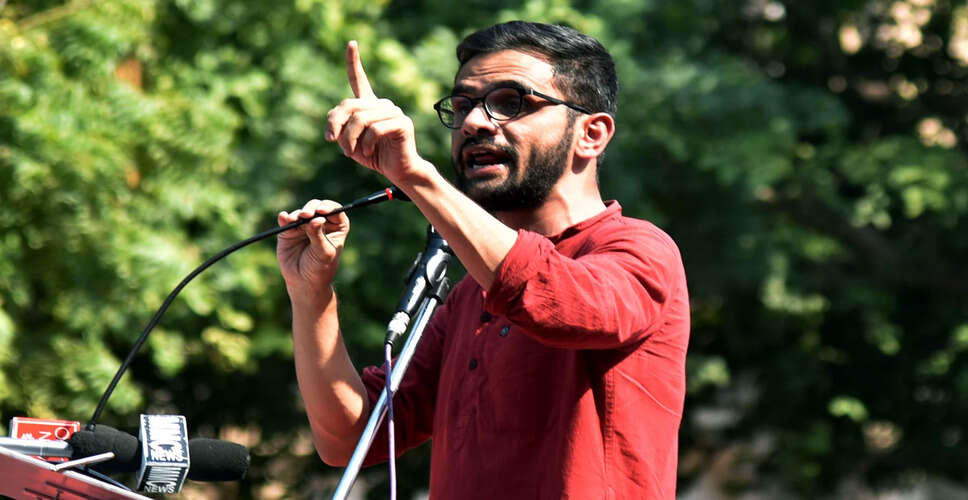
Supreme Court's Decision on Delhi Riots Case
On Monday, the Supreme Court rejected bail applications for activists Umar Khalid and Sharjeel Imam in connection with the conspiracy surrounding the 2020 Delhi riots. The court emphasized that issues of national security and public order take precedence over claims of prolonged detention before trial. However, the bench, comprising Justices Arvind Kumar and N.V. Anjaria, granted bail to five other accused individuals: Gulfisha Fatima, Meeran Haider, Shifa Ur Rehman, Mohammad Salim Khan, and Shadab Ahmed.
On December 10, the Supreme Court had reserved its judgment on the separate petitions of the accused, challenging the Delhi High Court's decision from September 2, which had denied them relief in the conspiracy case.
Representing the Delhi Police were Solicitor General Tushar Mehta and Additional Solicitor General S.V. Raju, while the accused were defended by senior lawyers including Kapil Sibal, Abhishek Singhvi, Siddharth Dave, Salman Khurshid, and Siddharth Luthra.
Arguments Against Bail
In opposition to the bail requests, the Delhi Police argued that the violence in Northeast Delhi was not spontaneous but rather the result of a "premeditated and well-orchestrated" conspiracy aimed at undermining India's sovereignty. The prosecution maintained that all accused were part of a common plan and thus accountable for each other's actions.
Supreme Court's Remarks
The bench stated, "This court is satisfied that the material presented by the prosecution establishes prima facie charges against the appellants, Umar Khalid and Sharjeel Imam. Legal limits apply to these appellants. At this stage of proceedings, it does not justify their release on bail."
The court noted that Umar and Sharjeel are in a "qualitatively different position" regarding the prosecution and evidence. "The court remarked that their roles were central to the alleged offenses. While the duration of their imprisonment is ongoing and lengthy, it does not violate constitutional mandates or nullify statutory restrictions," the Supreme Court bench added.
Future Possibilities for the Accused
While dismissing the bail applications of Umar and Sharjeel, the court allowed them the freedom to reapply for bail in the trial court once the examination of all prosecution witnesses is complete or after one year, whichever comes first. On December 10, the Supreme Court had heard arguments from Solicitor General Tushar Mehta and Additional Solicitor General S.V. Raju for the Delhi Police, as well as from senior lawyers Kapil Sibal, Abhishek Singhvi, Siddharth Dave, Salman Khurshid, and Siddharth Luthra representing the accused.
Background of the Delhi Riots Case
Umar, Sharjeel, and several others have been accused of being the "masterminds" behind the February 2020 riots, facing charges under the Unlawful Activities (Prevention) Act (UAPA), a counter-terrorism law, as well as provisions of the Indian Penal Code (IPC). These riots resulted in the deaths of 53 individuals and left over 700 injured, igniting during protests against the Citizenship Amendment Act (CAA) and the National Register of Citizens (NRC).
The accused approached the Supreme Court challenging the Delhi High Court's order from September 2, which had denied them bail in the "larger conspiracy" case related to the February 2020 riots.