
Supreme Court Demands Election Commission's Response on Voter Roll Disputes in West Bengal
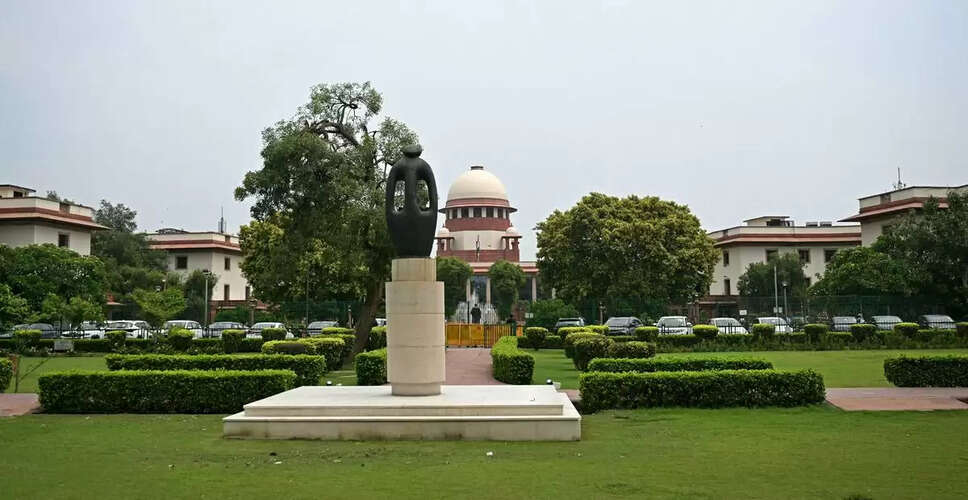
Supreme Court's Inquiry into Voter Roll Issues
On Monday, the Supreme Court requested the Election Commission to respond to allegations made by Trinamool Congress MPs regarding irregularities in the special intensive revision of voter rolls in West Bengal.
The Election Commission's counsel requested a two-week extension to submit their response, but the bench, led by Chief Justice Surya Kant and Justice Joymalya Bagchi, only allowed one week.
The case is scheduled for a follow-up hearing on January 19.
This inquiry stems from petitions filed by Rajya Sabha members Derek O’Brien and Dola Sen.
During the proceedings, O’Brien's lawyer, Kapil Sibal, claimed that booth-level officers were receiving instructions via WhatsApp rather than through official channels, complicating the ability to trace the audit process.
O’Brien emphasized that the Election Commission must not act arbitrarily or outside the law, nor should it replace established procedures with informal methods.
In her petition, Sen argued that the orders issued during this process were arbitrary and unconstitutional, resulting in the removal of eligible voters.
The draft electoral rolls for the state were released on December 16, revealing that over 58 lakh voters had been removed due to being marked as deceased, relocated, or absent.
The state's chief electoral officer previously announced that approximately 1.36 crore voters would be summoned for hearings after being excluded from the draft rolls due to discrepancies in their voter information.
An assistant electoral registration officer, who recently resigned, claimed that these discrepancies arose from errors in converting the 2002 Electoral Roll data into CSV files.
She noted that the names from 2002 were treated as 'sacrosanct,' despite many corrections being made later, leading to mismatches in parental names.
West Bengal is anticipated to hold Assembly elections in the first half of 2026.
In addition to West Bengal, the special intensive revision of electoral rolls is also taking place in 11 other states and Union Territories.
In Bihar, where the revision was completed prior to the Assembly elections in November, around 47 lakh voters were removed from the final electoral roll published on September 30.
Concerns were raised in Bihar regarding the potential exclusion of eligible voters during this revision process.