
Supreme Court Delays Hearing on Detained Climate Activist's Plea: What’s Next for Sonam Wangchuk?
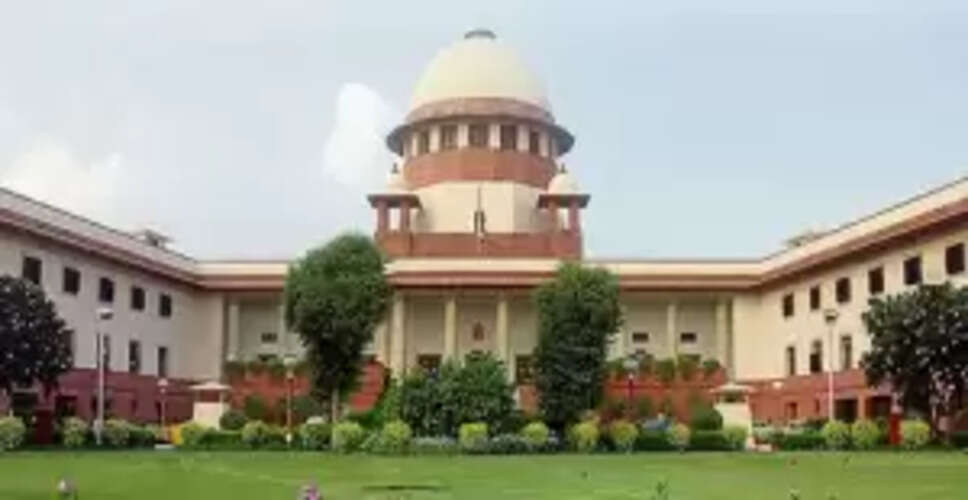
Supreme Court Adjourns Hearing on Wangchuk's Detention
New Delhi: On Thursday, the Supreme Court postponed the hearing regarding a petition from Gitanjali J Angmo, the spouse of imprisoned climate activist Sonam Wangchuk, challenging his detention under the National Security Act (NSA) until February 9.
A panel comprising Justices Aravind Kumar and PB Varale decided to defer the case.
Earlier, the court had inquired whether the government might reconsider Wangchuk's detention, particularly in light of his health issues.
Additional Solicitor General K M Nataraj argued that Wangchuk was linked to violent incidents in Leh last year, which resulted in four fatalities and 161 injuries.
On Tuesday, both the Centre and the Ladakh administration informed the court that Wangchuk was detained for allegedly inciting unrest in a sensitive border region.
Solicitor General Tushar Mehta defended Wangchuk's detention, asserting that all necessary legal protocols were adhered to under the NSA.
The Centre previously claimed that Wangchuk attempted to incite protests among the youth, similar to those seen in Nepal and Bangladesh.
Mehta noted that Wangchuk had even mentioned the Arab Spring, which led to the downfall of several governments in the Arab world.
The NSA allows for the detention of individuals deemed a threat to India's defense, with a maximum detention period of 12 months, although it can be lifted sooner.
Wangchuk, currently held in Jodhpur Central Jail, has denied accusations of advocating for government overthrow akin to the Arab Spring, asserting his right to protest and express dissent.
Senior advocate Kapil Sibal, representing Angmo, argued that the police relied on misleading evidence and selectively edited videos to justify the detention.
Angmo contends that the detention is unlawful and an arbitrary infringement of Wangchuk's fundamental rights.
Wangchuk was taken into custody on September 26, following violent protests demanding statehood and Sixth Schedule status for Ladakh, which resulted in four deaths. The government accused him of inciting this violence.
The petition argues that it is absurd for Wangchuk to be targeted after over three decades of recognition for his contributions to education, innovation, and environmental conservation in Ladakh and India.
Angmo stated that the violence in Leh on September 24 cannot be attributed to Wangchuk's actions or statements.
Wangchuk himself condemned the violence on social media, emphasizing that such actions would undermine Ladakh's peaceful pursuits over the past five years, which Angmo described as the saddest day of his life.