
Supreme Court Declines Refugee Plea, Asserts India Cannot Host All
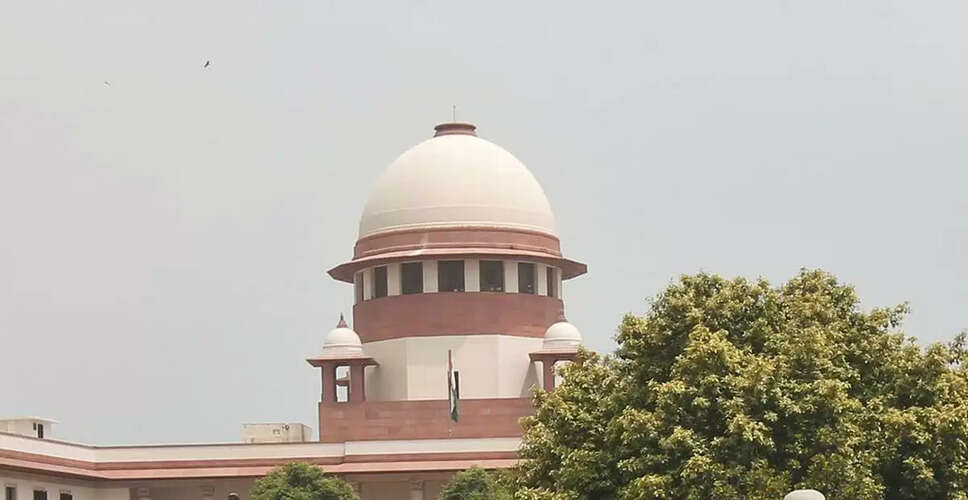
Supreme Court's Stance on Refugees
On Monday, the Supreme Court of India stated that the country is not a refuge or shelter for all, as it rejected a plea concerning the detention of a Sri Lankan Tamil national. The court's decision came during a hearing of a petition that contested a Madras High Court ruling mandating the immediate departure of the Sri Lankan man after he completed a seven-year sentence related to the Unlawful Activities Prevention Act.
Justice Dipankar Datta, part of the bench, questioned the feasibility of India hosting refugees globally, emphasizing the nation's struggles with its vast population of 1.4 billion. He remarked, "This is not a dharamshala where we can accommodate foreign nationals indiscriminately."
The individual in question, along with two others, was apprehended in 2015 by the Q Branch, which is responsible for monitoring left-wing extremism and internal security threats, on suspicions of being affiliated with the banned Liberation Tigers of Tamil Eelam (LTTE).
The LTTE was known for its efforts to create an independent Tamil state in Sri Lanka's northern and eastern regions. In 2018, the trial court found him guilty under the Unlawful Activities Prevention Act for his association with the organization. Although the Madras High Court later reduced his sentence to seven years in 2022, it mandated his transfer to a refugee camp post-release and expedited his deportation.
During the proceedings, the petitioner's lawyer argued that the man had entered India legally on a visa. When questioned about his right to remain in India, the lawyer claimed he was a refugee, with his family already residing in the country. The counsel highlighted the health issues faced by his wife and the congenital heart condition of his son.
The petitioner also revealed his involvement in the Sri Lankan civil war in 2009 as a member of the LTTE, stating that he had been blacklisted by the Sri Lankan government. He expressed fears of arrest and torture if returned to Sri Lanka.
In response, Justice Datta suggested he seek refuge in another country, asserting that the petitioner's liberty was not infringed upon unlawfully, as it adhered to established legal procedures. He further clarified that the right to reside in India, as outlined in Article 19 of the Constitution, is exclusive to Indian citizens.
This ruling follows a recent Supreme Court inquiry into claims that the Indian government forcibly deported 43 Rohingya refugees to Myanmar by pushing them into international waters. A different bench had denied an urgent hearing request regarding this matter, referencing a prior order that dismissed calls for halting the Rohingya deportations.