
Supreme Court Critiques Air Quality Management's Handling of Pollution Crisis
Supreme Court's Strong Stance on Air Pollution
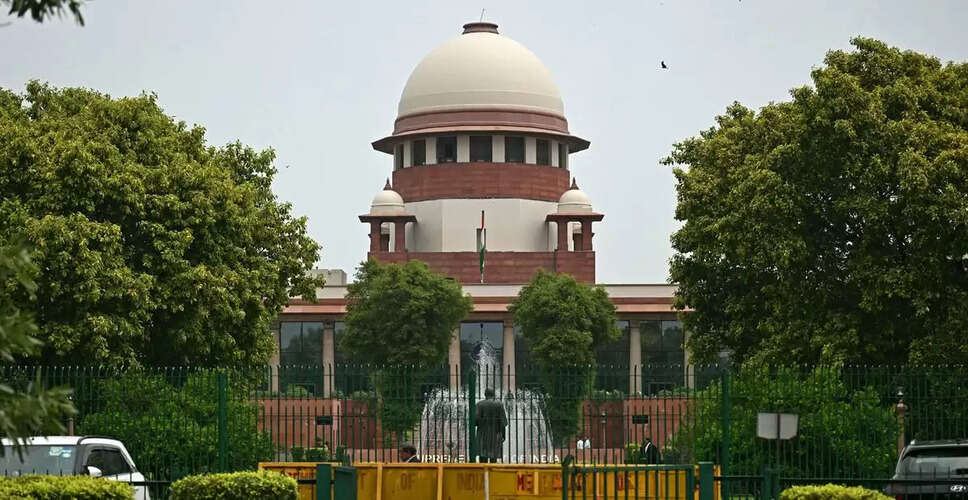
On Tuesday, the Supreme Court expressed its discontent with the Commission for Air Quality Management, labeling its approach to the air pollution crisis in the National Capital Region as “unserious,” according to reports.
A panel led by Chief Justice Surya Kant and Justice Joymalya Bagchi instructed the commission, established in 2020 to combat pollution in the region, to gather experts within two weeks and provide a report detailing the primary factors contributing to the deteriorating air quality.
This directive came during the court's review of multiple petitions addressing the alarming air quality in the capital.
The bench criticized the commission for requesting a two-month delay regarding the temporary closure or relocation of toll plazas at Delhi's borders, which was aimed at alleviating traffic congestion.
Previously, on December 17, the court had proposed the closure of toll plazas in the National Capital Region.
“Have you identified the pollution sources?” the bench inquired of the commission. “Numerous materials have emerged in the public domain, with experts sharing insights and opinions via email.”
The court acknowledged that various expert organizations had differing opinions on the pollution sources and their respective contributions to the decline in air quality.
In its ruling, the bench noted that several technical institutions, including the Indian Institute of Technology, had provided significantly different estimates regarding the causes of pollution.
The court remarked that despite numerous measures implemented over time, the air quality in the National Capital Region remained consistently poor, if not worsening, necessitating the court's intermittent involvement and consultations with experts.
However, the situation has continued to decline, as noted by the court.
Referring to another ruling from December 17, the bench stated that the commission was tasked with exploring long-term solutions to address air pollution.
The commission submitted a status report, which the bench criticized for lacking seriousness and failing to address many issues raised by the court.
It also noted that the commission did not seem eager to identify the causes of the worsening air quality or to develop long-term strategies.
The court emphasized that the Commission for Air Quality Management must consolidate all relevant experts to establish a consistent understanding of the causes based on available data.
The report detailing the primary pollution sources, which will be submitted to the court, is expected to be made public.
The commission was instructed to investigate long-term solutions and devise a phased implementation plan. Additionally, the statutory body was directed to consider the toll plaza issue in the National Capital Region without being swayed by stakeholder positions.
Air quality in Delhi typically worsens during winter, often ranking as the world's most polluted capital. Factors such as stubble burning in Punjab and Haryana, vehicle emissions, firecracker use during Diwali, lower temperatures, reduced wind speeds, and emissions from industries and coal plants exacerbate the situation.