
Supreme Court Considers Petition on Excluding Creamy Layer from SC/ST Reservations
The Supreme Court has agreed to hear a petition that challenges the inclusion of the creamy layer in SC/ST reservations. This case raises critical questions about social justice and equality within these communities. The petition argues that a segment of SC and ST individuals has become economically advanced, thus benefiting disproportionately from reservation policies. As the court seeks responses from the government, the implications of this case could reshape the landscape of reservations in India, prompting a broader discussion on social equity and historical injustices. The outcome may not only affect legal frameworks but also stir political and societal debates.
| Jan 13, 2026, 19:56 IST
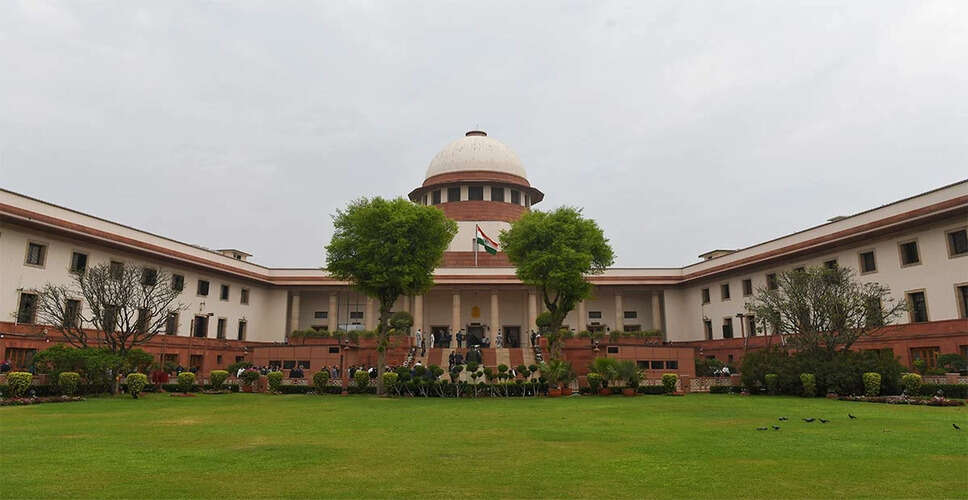
Supreme Court Reviews Reservation Petition
The Supreme Court has agreed to hear a public interest petition that seeks to exclude the creamy layer from the reservation benefits for Scheduled Castes (SC) and Scheduled Tribes (ST). The court has requested responses from the central and state governments on this matter, indicating that the issue is now subject to constitutional scrutiny. The petition, filed by senior advocate Ashwini Upadhyay, argues that within the SC and ST communities, a segment has emerged that is socially and economically more advanced. This group is repeatedly benefiting from reservations in government jobs, higher education, and political structures, while those truly marginalized are left behind. Upadhyay contends that the purpose of reservations was not to provide generational benefits but to alleviate social injustice. If a family has largely overcome this injustice, maintaining them in the same category compromises justice.
The petition also argues that if the concept of a creamy layer is accepted for Other Backward Classes (OBC), then why should it be avoided in the case of SC and ST? The Constitution advocates for equality, which does not mean ignoring unequal circumstances.
Read More: Supreme Court's Decision on Bail and Anti-National Gangs
In response to the petition, statements of support and opposition have begun to emerge. One side argues that despite economic or positional advancements, social discrimination persists. Incidents of discrimination, humiliation, and exclusion continue to occur. Thus, categorizing someone as part of the creamy layer based solely on income or position would overlook social realities. They assert that SC and ST reservations are not just about poverty but also a response to historical oppression.
However, it is also a harsh reality that the benefits of reservations often remain confined to a limited group. The most vulnerable families living in villages and remote areas still lack access to education and opportunities. For them, reservations are becoming a mere paper promise. This raises the question of whether it is time to make the system more targeted and just.
This issue is no longer limited to a court ruling; it will impact politics, society, and policy-making. If the creamy layer concept is applied to SC and ST reservations, it would signify a significant change. This change would be sensitive and contentious, as it could draw new lines within the community.
Overall, this debate should not be avoided but handled with maturity. If reservations are straying from their original purpose, questioning them is a strength of democracy. It is also crucial that in the name of reform, the pain and historical experiences of any community are not taken lightly. The balance must be to prioritize the most vulnerable.