
Supreme Court Clarifies Bail Orders and Judicial Independence

Supreme Court's Stance on Bail Orders
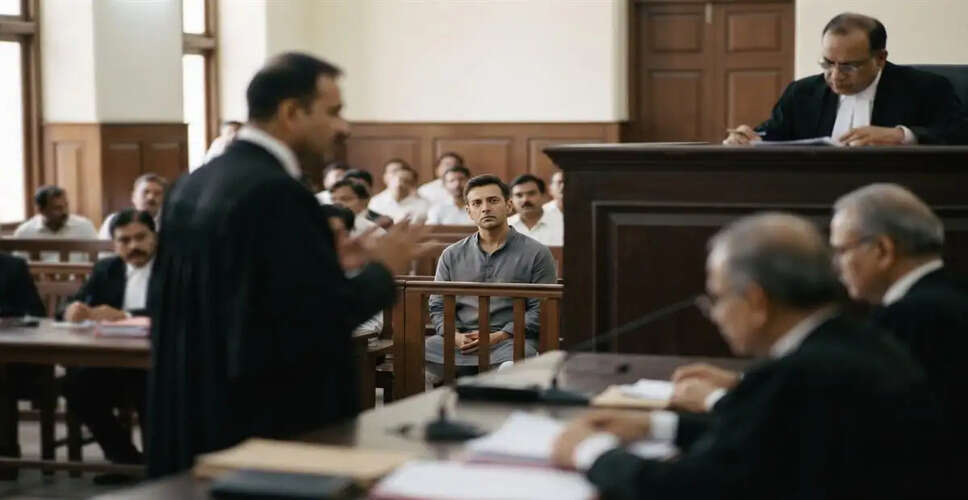
On Friday, the Supreme Court stated that the absence of detailed reasoning in a bail order does not necessitate a reconsideration of that order. The court emphasized that an individual's freedom is contingent not on flaws in the court's order but rather on the strength of the prosecution's case. This remark came while dismissing the Uttarakhand government's appeal against the bail granted to Abdul Malik, an accused in the Banbhoolpura violence case.
The allegations include that on February 8, 2024, a large crowd attacked security personnel with stones while demolishing a mosque and set fire to both government and private vehicles.
Additionally, it is claimed that the mob allegedly set fire to a police station and hurled petrol bombs at the police. The conspiracy for the violence is said to have been orchestrated at Malik's residence. Senior advocate Gaurav Bhatia, representing the state government, argued for the cancellation of the bail, asserting that the high court issued the order without providing clear reasons.
Justice Bagchi remarked, 'There is no need to reconsider bail orders that lack detailed reasoning.' The senior advocate contended that issuing bail without citing reasons contradicts several Supreme Court rulings. The judge responded, 'There is a need to revisit those rulings.' He also questioned the application of the Unlawful Activities (Prevention) Act by the state police.
Previously, Justice Bagchi expressed deep concern over the increasing trend of regularly challenging bail orders, dismissing petitions from the Enforcement Directorate and the Chhattisgarh government against a high court's decision to grant bail to Chaitanya Baghel.
Justice Bagchi noted, 'There is a ruling stating that reasons are not required when granting bail, but they are necessary when denying it.' He raised a pertinent question regarding the current case: 'If a mob sets a police station on fire, how can the Unlawful Activities (Prevention) Act be applied?'
The senior advocate replied that such actions disrupt public order, asserting that granting bail to such accused individuals would demoralize police personnel. Justice Bagchi countered, 'If you are concerned about the morale of police officers, you should have proven the accused guilty within two years.'
He criticized the state for failing to fulfill its primary duty, stating that filing a special leave petition to cancel bail should not be a means to cover up this failure. The judge clarified that public order and crimes under the Unlawful Activities (Prevention) Act are distinct issues, and the application of this stringent law can be challenged. He concluded, 'An individual's freedom does not depend on errors in the court's order but rather on the prosecution's case.'