
Supreme Court Chief Justice Highlights Importance of Socio-Economic Justice in Italy
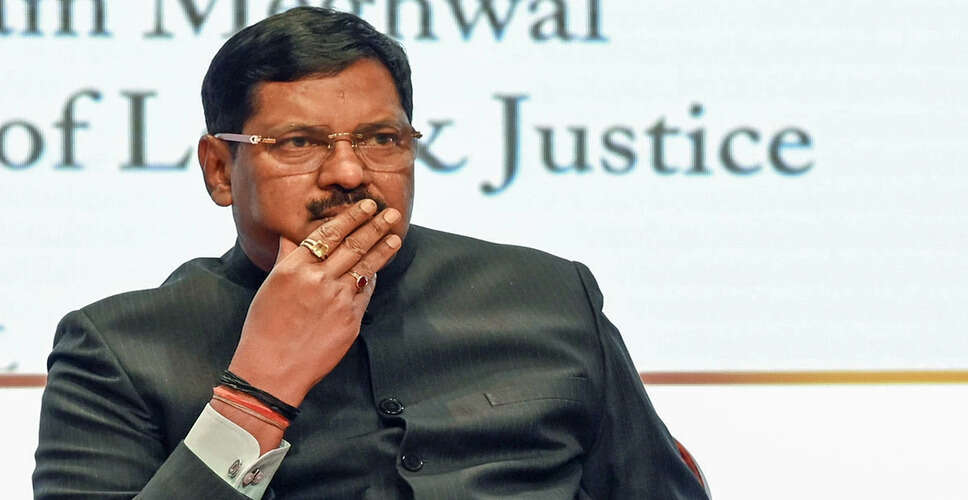
Chief Justice Raises Concerns Over 'Bulldozer Justice'
The Chief Justice has once again questioned the concept of 'bulldozer justice', emphasizing how the Supreme Court recently imposed a ban on such practices, preventing the executive from acting as judge, jury, and executioner. Chief Justice B.R. Gavai made these remarks while addressing a gathering of top judges in Italy, where he highlighted the Supreme Court's role over the past 75 years in delivering political, economic, and social justice to the marginalized and impoverished.
CJI Gavai stated that arbitrarily demolishing the homes of accused individuals, bypassing legal procedures, and violating citizens' fundamental right to housing (Article 21) is unconstitutional. He remarked, "The executive (government) cannot simultaneously act as judge, jury, and executioner." He referenced a Supreme Court ruling that asserted, "The construction of a home is an aspect of socio-economic rights." He added, "For an ordinary citizen, building a home represents years of hard work, dreams, and aspirations. A house is not merely property; it symbolizes stability, security, and collective hopes for the future of a family or individual."
Significant Contributions of the Indian Constitution
Reflecting on the last 75 years, CJI Gavai asserted that the Indian Constitution has consistently strived to bring about change in the lives of ordinary people. He noted that many aspects of the directive principles have been interpreted as fundamental rights or implemented through legislation. CJI Gavai was speaking at the Milan Court of Appeal in Italy on the journey of the Indian Constitution over the past 75 years. He stated, "While Parliament has initiated reforms through legislative and constitutional amendments, the Supreme Court has continuously transformed socio-economic rights into enforceable fundamental rights, which were later reinforced by Parliament."
A Journey of Ambition and Achievements
CJI Gavai described the 75-year journey of the Constitution as a narrative of great ambition and significant achievements in providing socio-economic justice. He mentioned that early initiatives by the Indian Parliament after adopting the Constitution included land and agricultural reform laws and affirmative action policies for backward classes. The impact of these initiatives is evident today. As the second Dalit Chief Justice of India, Gavai emphasized that affirmative action policies in education aimed at rectifying historical injustices and ensuring representation for Scheduled Castes, Scheduled Tribes, and socially and educationally backward classes are concrete evidence of the Constitution's commitment to real equality and socio-economic justice.
He stated that justice is not an abstract ideal; it must be rooted in social structures, the distribution of opportunities, and living conditions. He remarked, "For any nation, socio-economic justice is a crucial aspect of national progress. It ensures that development is inclusive, opportunities are equitably distributed, and all individuals, regardless of their social or economic background, can live with dignity and freedom." Expressing gratitude to the Chamber of International Lawyers for the invitation to speak, Justice Gavai reiterated that the journey of the Indian Constitution over the past 75 years is a story of great ambition and significant successes in achieving socio-economic justice.
Pride in the Constitutional Framework
He concluded by stating, "As the Chief Justice of India, I take pride in saying that the framers of the Indian Constitution were profoundly aware of the necessity for socio-economic justice when drafting its provisions. This draft was prepared after a long and arduous struggle for freedom from colonial rule." He added, "I have often said, and I reiterate today, that it is this constitutional approach of inclusion and transformation that allows me to stand before you as the Chief Justice of India. Coming from a historically marginalized background, I am a product of the same constitutional ideals that demand the democratization of opportunities and the breaking of the chains of caste and exclusion."