
Supreme Court Chief Justice Criticizes Bar Association's Farewell Decision for Justice Trivedi
Chief Justice B.R. Gavai has publicly condemned the Supreme Court Bar Association's decision to forgo a farewell ceremony for Justice Bela M. Trivedi, who is retiring soon. Justice Trivedi, the 11th woman to serve on the Supreme Court, has made significant contributions, including a recent ruling on sub-categorization within Scheduled Castes. Gavai's remarks highlight the importance of respect within the judicial community, while Trivedi's career journey from a district judge to the Supreme Court reflects her dedication to justice. Read on to discover more about her impactful tenure and the controversies surrounding her farewell.
| May 17, 2025, 13:02 IST
Chief Justice's Condemnation of Farewell Ceremony Decision
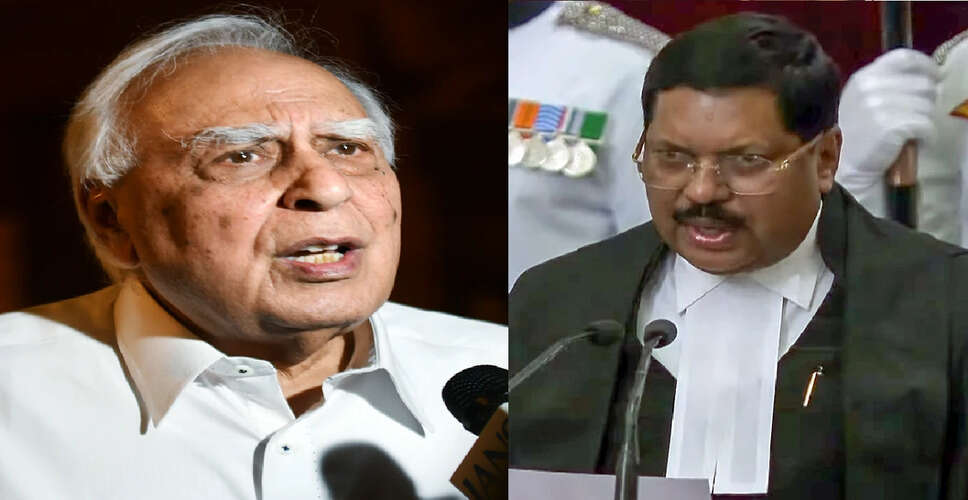
Chief Justice B.R. Gavai of the Supreme Court has expressed strong disapproval of the Supreme Court Bar Association's choice not to hold a formal farewell ceremony for Justice Bela M. Trivedi. He remarked that judges come in various forms; some provide relief while others do not, emphasizing their humanity and differing opinions. Gavai openly criticized the association's stance, advocating for a more respectful approach. He also acknowledged the presence of Bar President Kapil Sibal and other officials despite the association's decision. Justice Trivedi, who is the 11th woman to serve on the Supreme Court, is set to retire on June 9 but chose to mark her last working day on May 16 for personal reasons.
Significant Ruling Before Retirement
In a landmark ruling, the Supreme Court delivered a 6:1 verdict allowing states to create sub-categories within Scheduled Castes (SC) to allocate reservations to more marginalized groups. Justice Trivedi was the sole dissenting voice, arguing that such sub-categorization by states was unconstitutional. On the eve of her retirement, the bench led by Justice Trivedi highlighted the inadequacy of special courts for cases under the Protection of Children from Sexual Offences (POCSO) Act. The court urged the Union and state governments to take necessary measures to establish POCSO courts and ensure timely adjudication of cases.
Justice Trivedi's Journey from District Judge to Supreme Court
From District Judge to Supreme Court Justice
Justice Bela M. Trivedi began her judicial career in July 1995 as a judge in a lower court in Gujarat, following in her father's footsteps, who also served as a judge there. She was part of the constitutional bench of seven judges that ruled in August 2024 with a 6:1 majority, affirming the constitutional right of states to sub-categorize within the SC category, a decision she opposed.