
Supreme Court Awaits Government's Response on Marital Rape Legalization
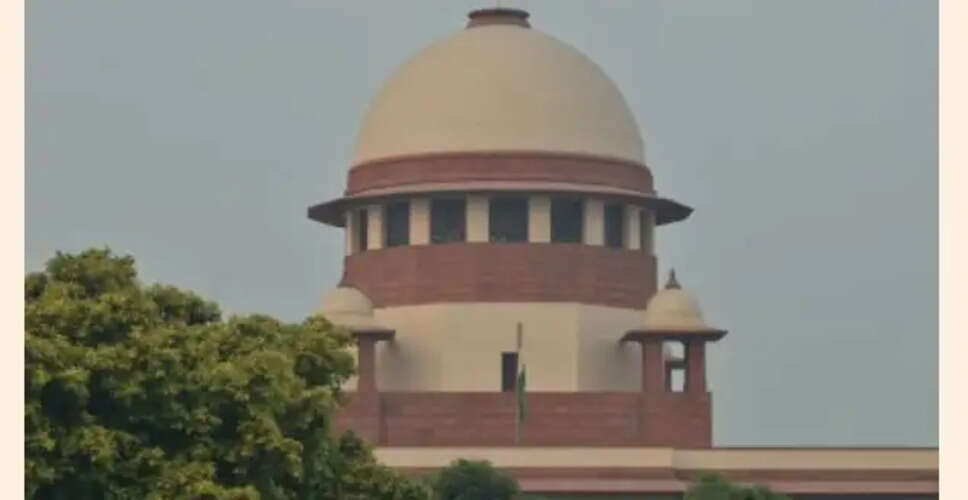

Supreme Court's Stance on Marital Rape Petitions
New Delhi: On Monday, the Supreme Court announced it will wait for the central government's position regarding a series of petitions that challenge the criminalization of marital rape before scheduling a hearing.
Senior advocate Indira Jaising brought forth a case concerning the prosecution of a husband for marital rape to a three-judge panel led by Chief Justice Surya Kant, requesting that the matter be set for a hearing in November.
Jaising, representing the wife, noted that while the case is set to be heard on Wednesday, the government has yet to submit a comprehensive response, and the involved parties have not exchanged their petitions.
"The Union has only provided a preliminary objection. I am requesting a specific hearing date in November. We have not exchanged the petitions, so we are unaware of their commonalities or differences," the senior counsel stated.
The bench, which also includes Justices Joymalya Bagchi and V Mohana, responded, "The matter is scheduled for Wednesday. The Union will present its stance, and we will determine a suitable date thereafter."
Karuna Nundy, another senior advocate representing a different petitioner, suggested that a date should be set to finalize the pleadings.
The court was informed that these petitions address the constitutional validity and interpretation of laws regarding marital rape.
According to the exception clause in Section 375 of the Indian Penal Code, which has now been replaced by the Bhartiya Nyaya Sanhita, sexual intercourse or acts by a man with his wife, provided she is not a minor, is not classified as rape.
Even under the new legislation, exception 2 to section 63 (rape) states that "sexual intercourse or sexual acts by a man with his own wife, provided she is not under eighteen years of age, is not considered rape."
Earlier, on January 16, 2023, the Supreme Court requested the Centre's response to several petitions challenging the IPC provision that shields husbands from prosecution for non-consensual sexual acts if their wives are adults.
The court subsequently issued a notice to the Centre regarding a similar petition contesting the BNS provision on this matter.
The newly implemented laws—the Bharatiya Nyaya Sanhita, the Bharatiya Nagarik Suraksha Sanhita (BNSS), and the Bharatiya Sakshya Adhiniyam—came into force on July 1, 2024, replacing the IPC, CrPC, and the Evidence Act.
One of the petitions stems from a split verdict by the Delhi High Court on May 11, 2022. This appeal was filed by a woman who was among the petitioners in the High Court.
In their split judgment, High Court judges Justice Rajiv Shakdher and Justice C Hari Shankar agreed to grant the petitioners permission to appeal to the Supreme Court, as the case involves significant legal questions that require the top court's ruling.
Justice Shakdher, who led the division bench, supported the idea of abolishing the marital rape exception, deeming it "unconstitutional" and lamenting that it would be "tragic if a married woman’s plea for justice goes unheard even after 162 years" since the IPC's enactment. Conversely, Justice Shankar argued that the exception under the rape law is not "unconstitutional and is based on a rational distinction."
The concept of intelligible differentia differentiates those included in a group from those excluded.
The Karnataka High Court previously stated that exempting husbands from allegations of rape and unnatural acts against their wives contradicts Article 14 (equality before the law) of the Constitution.
These petitions are public interest litigations challenging the IPC provision and contesting the constitutionality of the marital rape exception under Section 375 IPC (rape), arguing that it discriminates against married women who face sexual violence from their husbands.