
Supreme Court Approves Deployment of Judges for West Bengal Voter Roll Revision
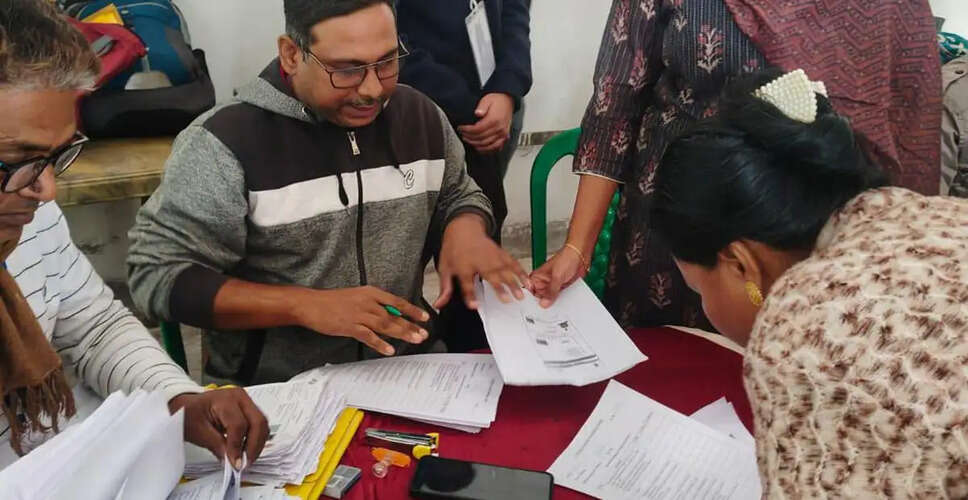
Judicial Support for Voter Roll Revision
On Tuesday, the Supreme Court announced that judges from Odisha and Jharkhand are permitted to assist in addressing claims and objections during the special intensive revision of electoral rolls in West Bengal.
A bench led by Chief Justice Surya Kant, along with Justices Joymalya Bagchi and Vipul M Pancholi, also granted permission for the Calcutta High Court to engage civil judges with a minimum of three years of experience to facilitate the voter roll revision process.
This decision came while the court was reviewing multiple petitions that contested the execution of the electoral roll revision in West Bengal, which is one of the twelve states and Union Territories currently undergoing this process.
The draft electoral rolls for the state were released on December 16, revealing that over 58 lakh voters had been removed due to being marked as deceased, relocated, or absent.
The removals from the draft rolls are provisional, allowing citizens to submit claims and objections regarding the deletion of their names.
Last Friday, the Supreme Court had permitted the appointment of judicial officers to aid in completing the revision amid ongoing disputes between the state’s Trinamool Congress government and the Election Commission.
The court instructed that serving and retired judicial officers from the Calcutta High Court, holding the rank of district judge or additional district judge, would review and resolve claims and objections related to logical discrepancies.
These discrepancies identified by the Election Commission include inconsistencies in parental names, minimal age differences with parents, and instances where parents have more than six children.
Previously, the Election Commission had raised objections concerning logical discrepancies for approximately 1.2 crore individuals.
On Tuesday, the Supreme Court referenced a letter from the chief justice of the Calcutta High Court, which indicated that there are 50 lakh cases of logical discrepancies pending resolution, with 250 judicial officers available to assist.
The letter noted that even if one officer resolves 250 cases daily, the process would take at least 80 days to complete.
In light of this, the Supreme Court stated that the chief justice of the Calcutta High Court is authorized to reach out to his counterparts in the High Courts of Jharkhand and Odisha for additional judicial officer support.
The court specified that the Election Commission would cover travel, honorarium, and other expenses for these officers.
Furthermore, the court indicated that Aadhaar cards, Class 10 admit cards, and passing certificates would be accepted as valid proof of eligibility during the voter roll revision.
All documents, whether updated electronically or submitted physically before February 14, 2026, will be considered valid, as stated by the bench.
The court also confirmed that the final voter list could be published on February 28, with supplementary lists to follow continuously.
On February 10, the Election Commission extended the deadline for responding to notices until February 14, with the final voter list publication date also pushed to February 28.
In her petition against the revision process, West Bengal Chief Minister Mamata Banerjee expressed concerns that the voter roll revision could lead to significant disenfranchisement of eligible voters in the upcoming Assembly elections.
She has requested the court to ensure that elections proceed based on the existing electoral rolls established last year.
The Assembly elections in West Bengal are anticipated to take place in April or May.