
Supreme Court and Delhi High Court Question Jantar Mantar's Role as Protest Site
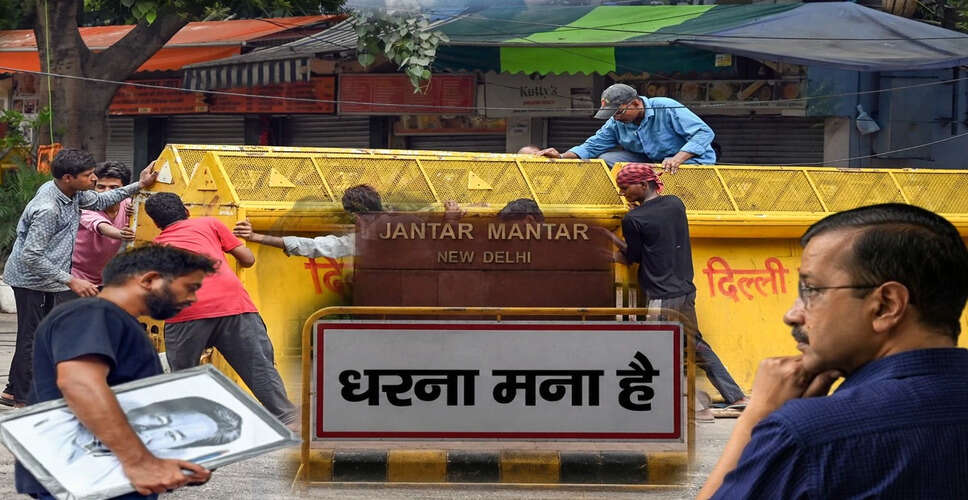

Jantar Mantar: A Hub of Constitutional Debate
In the heart of Delhi, Jantar Mantar has evolved from merely a site for protests to a focal point of constitutional discussions. The Supreme Court has demanded a firm response from the central government regarding the management of large-scale protests, while the Delhi High Court has posed a direct question: Why is Jantar Mantar not closed for protests? This iconic location, synonymous with demonstrations in the capital, is now under judicial scrutiny. During a significant hearing, the Supreme Court, led by Chief Justice Suryakant, asked if there could be a more organized alternative for large protests. Satish Chandra Kaushik, the petitioner, argued that Jantar Mantar is no longer practical for major demonstrations due to a lack of basic amenities such as water and toilets, which also affects local residents.
Concerns Over Facilities and Traffic Disruptions
Opinions vary regarding the conditions at Jantar Mantar. Many believe that the lack of facilities impacts both the public and the protesters. Saurabh Das, a spokesperson for the Cockroach People's Party, expressed his views on social media, questioning whether the government would designate India Gate as an alternative site for peaceful protests, as they have already restricted access to it. He emphasized that they will not allow Jantar Mantar to be taken away from them. Additionally, the traffic chaos caused by these protests has become a significant concern, disrupting the flow of emergency services and daily commuters. The Delhi High Court has also taken a stern stance on this issue, directly questioning the central government.
Why Not Close Jantar Mantar for Protests?
The Delhi High Court raised questions about maintaining Jantar Mantar as a designated protest site. The court inquired why the city should be held hostage unnecessarily and asked the central government why Jantar Mantar cannot be closed for protests. Justice Amit Mahajan made these remarks during a hearing related to a petition from the All India Dalit Christian Rights Protection Committee, which sought directives for the Delhi Police regarding a protest application for August 10. Senior advocate Sanjay Ghosh, representing the petitioner, mentioned that only 75 individuals would attend. Justice Mahajan then asked the Additional Solicitor General Chetan Sharma why the site could not be closed. The ASG responded that the Supreme Court is currently considering this question. Ghosh further inquired if protests could not occur in Delhi, to which Justice Mahajan stated that it would be up to the police to decide. The High Court instructed the Delhi Police to make a decision on the organization's application by August 8.
A Historical Perspective on Jantar Mantar
Jantar Mantar has been a site for protests for 33 years, with the Supreme Court previously lifting a ban on demonstrations. Following the farmers' movement in 1988, protests were halted at Boat Club, leading to the first demonstration at Jantar Mantar in 1993. There is no official record of an order designating Jantar Mantar as a protest site; it developed as an administrative arrangement by the police. In response to complaints from local residents about noise and pollution, the National Green Tribunal (NGT) prohibited protests there in 2017, directing them to Ram Leela Maidan. However, in 2018, the Supreme Court reaffirmed that peaceful protests are a constitutional right, lifting the ban and calling for a regulated protest system. The demand for an alternative protest site is now pending before the Supreme Court.
The Political Implications of the Ongoing Debate
This issue has transcended legal boundaries and is becoming increasingly political. The critical question remains whether the government can strike a balance between the freedom to protest and the convenience of the general public. Will the historical significance of Jantar Mantar be diminished, or will it be transformed under a new system? Once a symbol of democratic expression, Jantar Mantar now stands as a challenge to the very democratic framework it represents. The ultimate decision lies with the government, but all eyes are on the Supreme Court's next hearing.