
Supreme Court Advises Against Introducing Third Language in Class 9

Supreme Court's Directive on Language Education
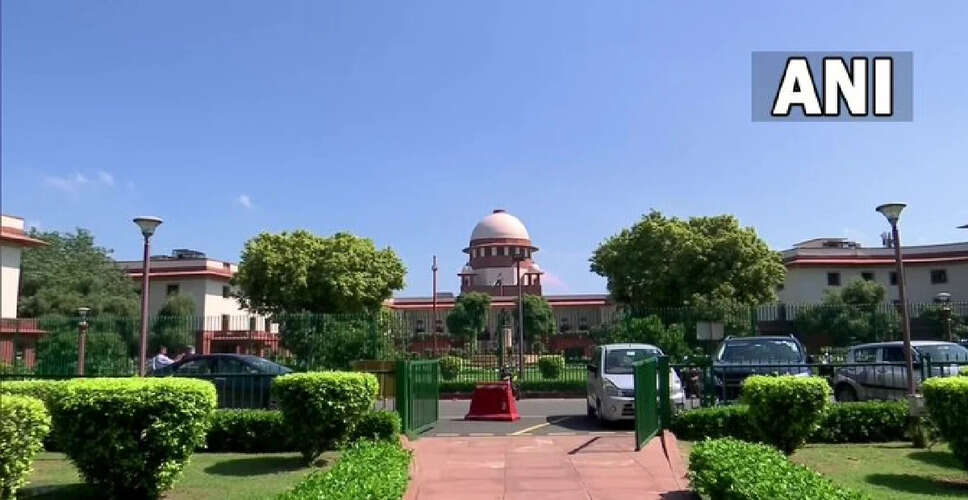
The Supreme Court has advised the central government to refrain from implementing a third language in Class 9. Justice B.V. Nagarathna criticized the Central Board of Secondary Education (CBSE), stating that introducing a third language at this level would increase stress among students. The judge emphasized that the third language should be introduced in Class 6 instead of Class 9. Previously, CBSE had issued clarifications regarding the assessment of the third language (R3). According to CBSE, starting from the academic year 2027-28, students will need to pass a school-based assessment to obtain their Class 10 passing certificate, although there will be no board examination for them. Students who do not pass the internal assessment will have to undergo re-evaluation by their schools to receive their secondary school examination certificate.
Assessment Guidelines for Third Language
In a circular, CBSE stated that the evaluation of the third language (R3) will be conducted solely through internal school-based assessments. The assessment criteria applicable for Class IX (2026-27) and Class X (2027-28) will also apply to these batches. When these students reach Class X, there will be no CBSE board examination for the third language.
Language Requirements as per CBSE
According to CBSE's guidelines issued on June 29, it was specified that out of the three languages chosen, two must be Indian languages. The third language (R3) can be a non-Indian language, provided that the other two are Indian languages.
Details for Class 10 Students (2026-27)
Students in Class 10 will continue with the existing two-language system and will not be required to take a third language.
Details for Class 9 Students (2026-27)
Class 9 students will study three languages, one of which must be an Indian language. The evaluation for the third language (R3) will be conducted internally by the school. When this batch reaches Class 10 in 2027-28, there will be no CBSE board examination for the third language.
List of Indian and Non-Indian Languages
Indian languages include Hindi, Sanskrit, Tamil, Telugu, Kannada, Malayalam, Marathi, Bengali, Punjabi, Gujarati, Odia, Assamese, and others. Non-Indian languages include English, French, German, Arabic, Spanish, etc.
Understanding the Three-Language Formula
As per the CBSE secondary school curriculum, language subjects will be categorized into three levels: R1, R2, and R3. R1 (Language 1) will be the student's primary language, R2 will be a different language, and R3 (the third language) will become mandatory from Class 6 starting in the 2026-27 academic session and will be fully implemented by 2030-31. The languages chosen for R1 and R2 cannot be the same and should not be taught at multiple levels simultaneously. CBSE's notification indicates that the languages include India's two official languages, Hindi and English, along with 42 other languages. Thus, all languages listed in the Eighth Schedule of the Indian Constitution, as well as other regional and foreign languages, will be offered.