
Supreme Court Addresses Rising Student Suicides and Mental Health Concerns
Introduction to the Issue
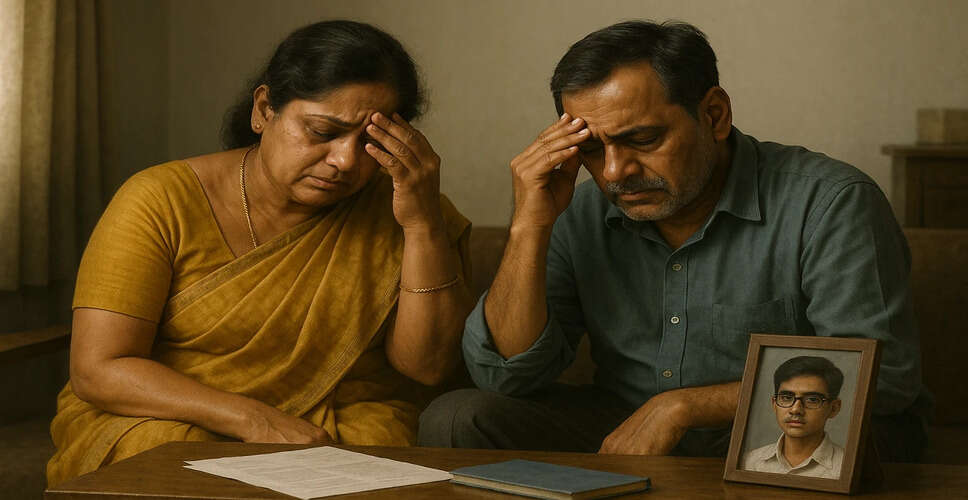
The lyrics from the 1970s film 'Ek Phool Do Maali' resonate with the aspirations parents have for their children, hoping they will achieve greatness. However, recent events have raised alarms about the mental health crisis among students. The Supreme Court has taken notice of troubling trends within educational institutions, indicating a need for urgent attention.
Recent Tragic Incidents
Two recent suicides have drawn significant concern: one involving an undergraduate student at IIT Kharagpur and another at Shadra University in Greater Noida, where a BDS student named Jyoti Sharma took her life, citing harassment from faculty members. These incidents highlight a disturbing pattern, as similar cases have emerged in the past, including a tragic event involving a student from Nepal.
Supreme Court's Response
In light of these tragedies, the Supreme Court has expressed its worries regarding the increasing mental health issues among students and the lack of effective laws to prevent suicides. The court has issued 15 guidelines that will be enforced across all educational institutions until a formal law is established.
Statistics on Student Suicides
A bench comprising Justices Vikram Nath and Sandeep Mehta referred to a report from the National Crime Records Bureau (NCRB), revealing alarming statistics. In 2022, over 170,000 individuals committed suicide in India, with 13,044 being students. This marks a significant increase from 5,425 student suicides in 2001, with many students taking their lives due to academic failures.
Comparative Suicide Rates
| Daily Wage Workers | 25.6% |
| Self-Employed | 12.3% |
| Employed | 9.7% |
| Unemployed | 8.4% |
| Students | 8% |
| Farmers | 6% |
*Data from 2021. (Source: IC3 Report 2024)
Guidelines Issued by the Court
The Supreme Court has laid down 15 crucial guidelines aimed at improving mental health support in educational institutions. These include the implementation of mental health policies, the appointment of trained counselors, and the establishment of awareness programs for parents to help them recognize stress in their children.