
Supreme Court Addresses Rahul Gandhi's Conduct Amid Opposition March

Overview of the October 12 Incident
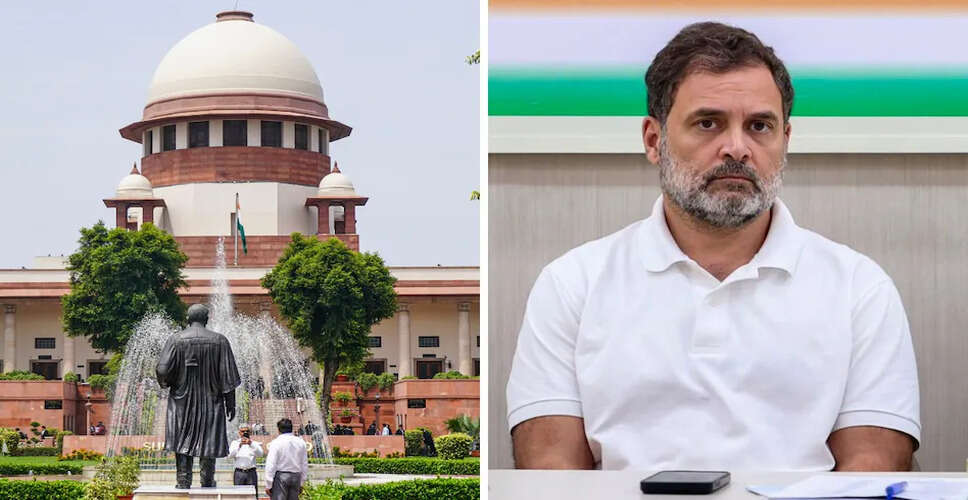
On October 12, 2026, Rahul Gandhi, along with leaders from the India alliance, led a march in Delhi to voice their grievances against the Election Commission. This event was marked by a demand for a meeting with the Chief Justice and discussions surrounding the role of the judiciary. Reports suggest that the Chief Justice's remarks should not be interpreted as a direct reprimand of Rahul Gandhi's personal conduct. Instead, the court's primary concern revolved around judicial processes, law and order, and the integrity of constitutional institutions.
Details of the March
During the march on October 12, several leaders from the India alliance raised objections regarding the Special Intensive Review (SIR) of the voter list and alleged vote theft. They insisted on a fair investigation into the purported irregularities in the voter list, including the removal of eligible voters' names.
Request for Meeting with the Chief Justice
Rahul Gandhi and Congress President Mallikarjun Kharge sought an appointment with the Chief Justice to discuss issues related to the Election Commission and actions taken during the protests in Delhi. However, the Chief Justice declined the meeting, emphasizing that the matters were already under judicial consideration. He stated that discussing such issues at an administrative level would not align with judicial propriety and the principle of separation of powers.
Chief Justice's Remarks
In response to the protests and law and order concerns, Chief Justice Suryakant remarked that these matters fall under law enforcement and are not within his jurisdiction. He reiterated that the Supreme Court remains accessible to all citizens and representatives. If any individual or political party believes their constitutional rights have been violated, they are encouraged to approach the court through the appropriate legal channels.
Clarifying the Chief Justice's Comments
To fully grasp the situation, it is crucial to distinguish between the Chief Justice's comments and a personal reprimand of any leader. Reports indicate that the Chief Justice cited judicial propriety and the separation of powers when denying the meeting with Rahul Gandhi and Mallikarjun Kharge. He did not imply that Rahul Gandhi was being punished for his personal conduct.
Opposition's Concerns Regarding the Election Commission
Leaders from the India alliance, including Rahul Gandhi, raised concerns about the Election Commission's operations, particularly regarding the Special Intensive Review process. They argued that this process could adversely affect many eligible voters. The opposition has called for transparency in the electoral process and the protection of voters' rights.
Political Reactions and Judicial Process
Following these events, political rhetoric intensified between the BJP and Congress. Some BJP leaders questioned Rahul Gandhi's demand for a meeting with the Chief Justice, asserting that the judiciary should remain separate from political disputes. Conversely, Congress and other opposition parties defended their right to raise issues related to the Election Commission as a democratic entitlement.
Ultimately, the Supreme Court has maintained that the path for addressing complaints related to constitutional rights remains open. While political parties present their arguments regarding the events of October 12, there is insufficient basis to label the Chief Justice's comments as a direct reprimand of Rahul Gandhi's conduct.