
Super Typhoon Bavi Strikes Rota, Threatening Guam and Northern Mariana Islands
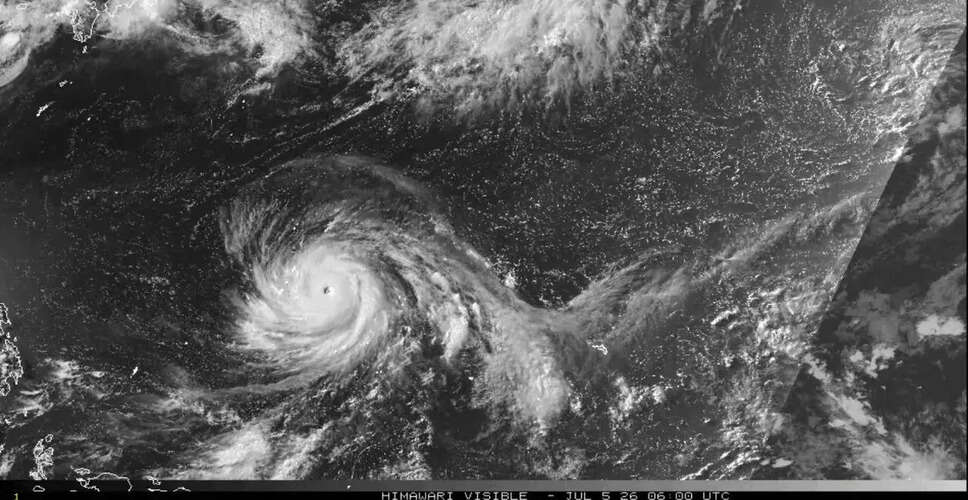

Impact of Super Typhoon Bavi
Super Typhoon Bavi has made landfall on Rota, a US Pacific island, unleashing destructive winds and heavy rainfall across Guam and the Northern Mariana Islands, as reported by the US National Weather Service (NWS). The storm is generating sustained winds nearing 180 mph, with gusts hitting up to 217 mph, as the western eyewall traverses the area. The NWS cautioned that this "very dangerous" typhoon could inflict "catastrophic" damage, with waves potentially soaring to nearly 11 meters.
In anticipation of the storm, residents in the US Pacific territories have been relocating to emergency shelters and finalizing their preparations. Rota, located about 50 km (31 miles) northeast of Guam, has experienced a direct impact from the storm, according to the NWS. The mayor's office has advised residents to brace for "destructive winds," warning that "conditions are expected to worsen rapidly, making outdoor activities unsafe."
The NWS forecasts that typhoon-force winds will persist until early Monday afternoon, while tropical storm-force winds may continue until after midnight. In Guam, which has a population of approximately 170,000, authorities have established five evacuation centers, primarily for those most at risk. The island's civil defense office reported that one shelter had reached its capacity by Sunday afternoon, necessitating the redirection of evacuees to alternative locations.
The Joint Typhoon Warning Center (JTWC), part of the US military, has categorized Bavi as a super typhoon. Such storms have sustained winds exceeding 240 km/h and are regarded by the NWS as having destructive potential similar to that of a Category 4 or Category 5 hurricane. Residents have been hurriedly preparing as the storm approaches. Pinky Cubacub, a restaurant owner in Guam, shared with AFP that she spent around $500 (£373) on plywood to secure her business. "I cannot afford to lose so many days. It hurts," she expressed. "Because I just started, whatever we're making right now is just for rent, utilities, and my people, and supplies. I don't even pay myself yet."
Japanese tourist Miku Sakurai mentioned to AFP that her return flight to Tokyo had been canceled. "We will stay in the hotel when the storm comes. I am scared," she admitted. Bavi is the second super typhoon to pose a threat to Guam and the Northern Mariana Islands this year, following Super Typhoon Sinlaku in April, which resulted in 17 fatalities and caused an estimated $1.5 billion in damages. The western Pacific is recognized as one of the globe's most active regions for tropical cyclones. Scientists attribute the increasing intensity of storms to rising sea surface temperatures linked to climate change, while a strong El Niño event is anticipated to further elevate the chances of powerful tropical cyclones in the area.