
Successful Brain Aneurysm Surgery Saves Life of 63-Year-Old Woman in Jaipur
Overview of the Incident
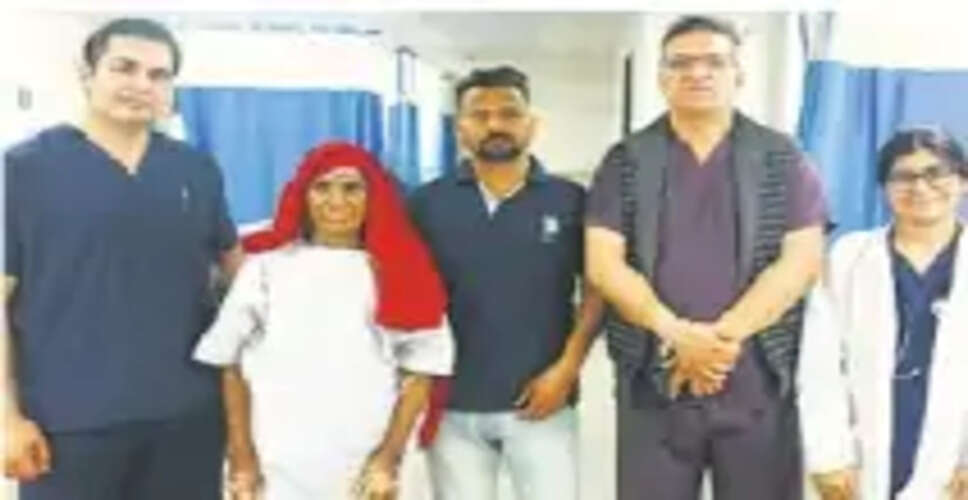
A 63-year-old woman named Raja Devi from Dudu was rushed to Pink Star Hospital in Jaipur after suddenly losing consciousness. Her family was extremely anxious due to her critical condition. The emergency team at the hospital promptly transferred her to the ICU and initiated necessary examinations.
What Do the Test Results Indicate?
Advanced diagnostic tests, including CT scans, MRIs, and cerebral angiography, revealed that a significant aneurysm had ruptured in Raja Devi's internal carotid artery. This rupture led to a subarachnoid hemorrhage, which is considered one of the most dangerous forms of brain aneurysm.
- This condition is regarded as life-threatening.
- Without timely treatment, 30-40% of patients may not survive the first 24-48 hours.
- Survivors often face paralysis, coma, or permanent brain damage.
How Was the Treatment Administered?
Given the severity of the situation, Dr. Rajvendra Singh Chaudhary, a senior consultant neurosurgeon at Pink Star Hospital, decided to proceed with surgery immediately. The following steps were taken:
- Immediate Stabilization — Blood pressure control, pain relief, anticonvulsants, and ventilator support were provided.
- Detailed Imaging — 3D angiography was utilized to accurately map the size and location of the aneurysm and surrounding blood vessels.
- Surgery — An aneurysm clipping was performed through an open craniotomy. A special titanium clip was placed on the neck of the aneurysm using a microscope and advanced neuro-navigation systems to prevent further bleeding.
- In some cases, coiling (endovascular) is an option, but due to the location and cause of the rupture in this case, clipping was deemed safer.
- Post-Operative Care — Monitoring in the ICU for 5-7 days, with an external ventricular drain (EVD) if necessary to prevent hydrocephalus, followed by transfer to a regular ward.
Condition After Surgery
The surgery was successful, and Raja Devi is now fully conscious.
- She is able to speak and recognize her family.
- Movement has returned to her limbs.
- Complaints of headaches and nausea have nearly resolved.
- Her recovery is progressing rapidly, and she is expected to be discharged soon.
Family's Response
Family members expressed heartfelt gratitude to the hospital staff, particularly to Dr. Rajvendra Singh Chaudhary. One family member stated, "We were losing hope, but the team at Pink Star Hospital performed a miracle. Thanks to modern equipment, experienced doctors, and round-the-clock care, my mother has been given a new lease on life."
Important Facts About Brain Aneurysms
- Most aneurysms remain asymptomatic, but when they rupture, they can cause sudden headaches (often referred to as 'thunderclap headache'), vomiting, and loss of consciousness.
- Risk factors include high blood pressure, smoking, age (50+), and family history.
- Timely arrival at a hospital and treatment at a specialized neurosurgery center is the only way to prevent serious outcomes.
Pink Star Hospital (located in Mansarovar Extension, Jaipur) is rapidly gaining recognition for handling complex cases related to the brain and spine. This success reflects the growing capabilities of their neuroscience department.