
Strengthening Ties: India and Bangladesh's Evolving Relationship

Improved Relations Amid Security Concerns
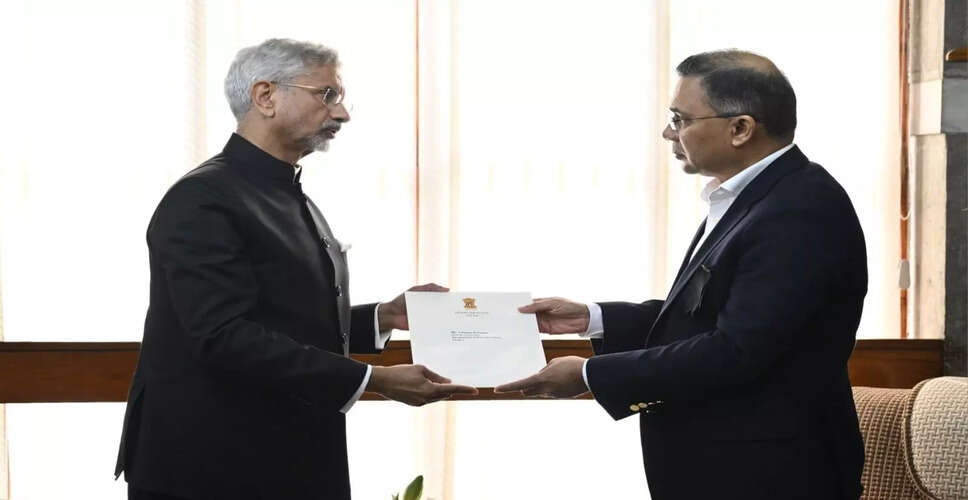
File image of EAM Jaishankar (Left) with now Bangladesh PM Tarique Rahman (Photo: @DrSJaishankar/X)
Guwahati, April 28: The relationship between India and Bangladesh has seen significant improvement since the Bangladesh Nationalist Party (BNP) took power in Bangladesh.
Despite this positive shift, security agencies must remain vigilant as various terrorist organizations continue to operate within Bangladesh, posing a potential threat of infiltration into India.
According to official sources, the ties between the two nations soured during Md Yunus's leadership of the caretaker government in Bangladesh, following Sheikh Hasina's ousting.
Sources indicated that Yunus's administration adopted an anti-India stance, which contributed to the decline in bilateral relations.
During his tenure, Bangladesh grew closer to Pakistan, with several high-ranking military officials visiting the country.
Additionally, numerous terrorist leaders were released from prison, allowing these groups to operate freely.
However, relations began to improve once the BNP, led by Prime Minister Tariq Rahman, took office.
It is noted that an elected government must prioritize the welfare of its citizens, and Bangladesh's survival is closely tied to its relationship with India.
While anti-India factions remain active in Bangladesh, the elected government is unlikely to adopt an openly hostile approach towards India.
Furthermore, Rahman's familial ties to the Liberation War of Bangladesh underscore the importance of India's role in the country's independence.
Nevertheless, groups such as Ansar Bangla Team (ABT) and JMB continue to operate covertly within Bangladesh.
Even during Sheikh Hasina's administration, members of these terrorist organizations attempted to infiltrate India.
Fortunately, swift actions by law enforcement and security forces thwarted their efforts to establish a foothold.
These groups typically attempt to enter India through states like Tripura, Assam, and West Bengal before spreading to other regions.
Despite previous successes in preventing these infiltrations, sources acknowledge that future attempts cannot be ruled out.