
Strengthening Justice: New Committee to Enhance Court Infrastructure in India
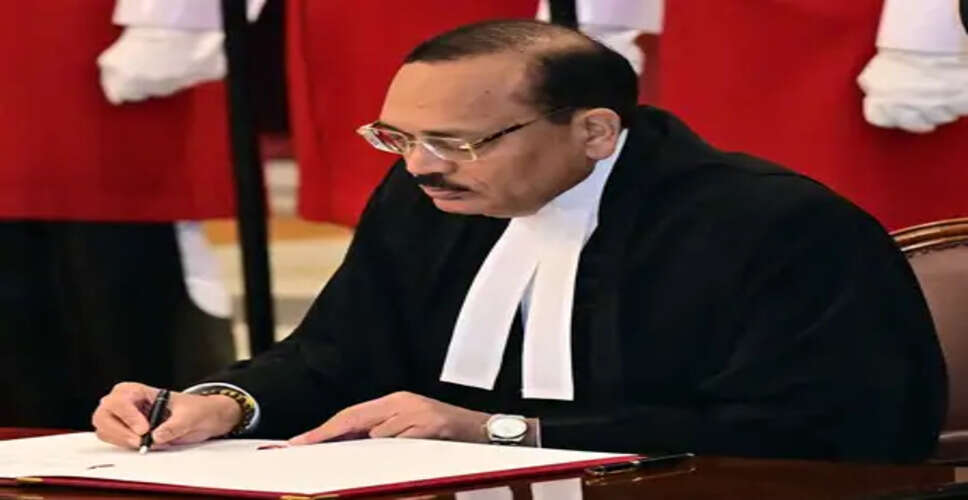

New Initiative for Judicial Infrastructure
New Delhi: In an effort to enhance the judicial system, Chief Justice of India (CJI) Surya Kant has established a Judicial Infrastructure Advisory Committee tasked with assessing the infrastructural needs of courts across the country.
This committee, led by Supreme Court Justice Aravind Kumar, is responsible for evaluating the judicial infrastructure requirements and is expected to advocate for a government budget allocation ranging from Rs 40,000 to 50,000 crore for this sector.
An interim report is due by August 31. The committee includes notable members such as Justice Debangsu Basak from the Calcutta High Court, Justice Ashwani Kumar Mishra from the Punjab and Haryana High Court, and Justice Somasekhar Sundaresan from the Bombay High Court. Additionally, the Director General of the Central Public Works Department (CPWD) and the Secretary General of the Supreme Court will also participate, with the latter acting as Member Secretary.
The committee's mission is to identify infrastructural deficiencies in courts and propose strategies to modernize judicial facilities, thereby enhancing the efficiency of justice administration.
Key focus areas will include recognizing challenges faced by stakeholders in the justice system, ensuring sufficient infrastructure for judges, lawyers, litigants, and visitors, and recommending technology-based solutions for quicker case resolutions.
Moreover, the panel will look into the computerization of courts as part of the e-Courts initiative, the provision of citizen-centric digital services, the establishment of modern court complexes, and the enhancement of working conditions for judicial officers and court personnel.
This development is particularly important given the increasing emphasis on judicial infrastructure and the digitization of courts nationwide. The government is actively promoting the digitization of the judiciary through the e-Courts Mission Mode Project.
For Phase-III of the e-Courts Mission Mode Project (2023-2027), the government has allocated Rs 7,210 crore, aiming to transform Indian courts into digital and paperless entities.
The initiative encompasses the digitization of historical records, the expansion of video conferencing capabilities to courts, jails, and hospitals, universal access to e-Sewa Kendras, the deployment of AI-based tools, and the creation of cloud-based judicial data repositories.
Earlier this year, the Parliamentary Standing Committee on Personnel, Public Grievances, Law and Justice raised concerns regarding the slow expenditure and utilization of funds by various states under the Centrally Sponsored Scheme (CSS) for Judicial Infrastructure Development.
In its 162nd Report on the Demands for Grants (2026-27) from the Department of Justice, the committee, chaired by Rajya Sabha MP Brij Lal, recommended closer oversight of the scheme to ensure timely project completion and effective fund utilization.
The committee also highlighted issues with digital infrastructure and inadequate network connectivity in courts, suggesting that such facilities should be uniformly provided to High Courts and subordinate courts throughout the nation.