
Strengthening Defense Ties: India and Germany's Strategic Partnership
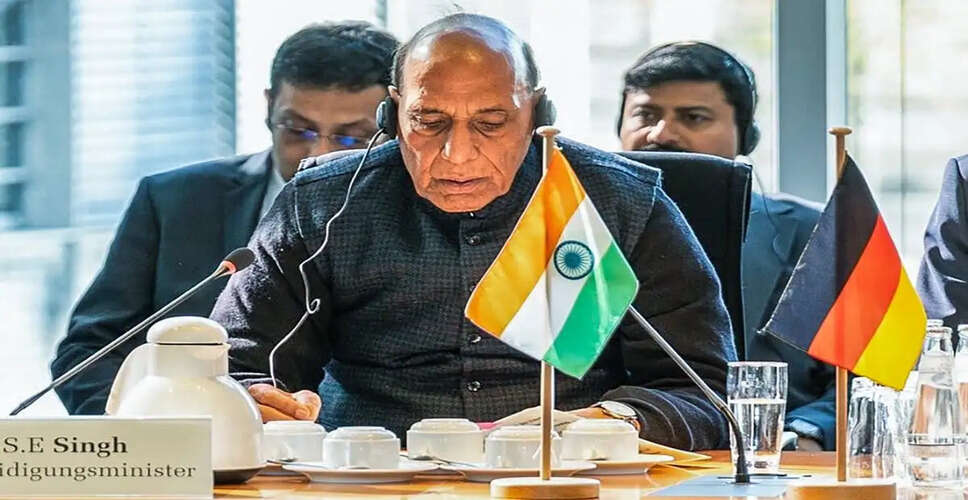

A New Era in India-Germany Defense Cooperation
The defense collaboration between India and Germany has entered a significant new phase. Recent developments, particularly the ongoing conflicts in West Asia and global instability, have heightened the importance of this partnership. Defense Minister Rajnath Singh's visit to Germany has not only provided fresh direction to this cooperation but has also clarified its strategic and tactical dimensions. The growing defense ties between New Delhi and Berlin emerge at a time when the world is grappling with rapidly evolving security challenges. The ongoing strife in West Asia and disruptions in the Strait of Hormuz pose risks that directly impact energy security and economic stability. Consequently, India is now viewing these challenges not merely as regional issues but as global crises.
The Significance of Defense Collaboration
In this context, the significance of defense cooperation between India and Germany becomes even more pronounced. Both nations are natural partners based on democratic values, robust economies, and technological innovation. Prime Minister Narendra Modi and German Chancellor Friedrich Merz have emphasized strengthening this strategic partnership. A key aspect of this defense collaboration is industrial partnership. India aims to achieve self-reliance in defense production under the 'Atmanirbhar Bharat' initiative. This is not just a procurement program but an invitation for co-development, co-production, and co-innovation. Germany's advanced industrial capabilities combined with India's rapidly growing technological prowess enhance the effectiveness of this collaboration.
Submarine Project: A Key Example
The proposed submarine project between the two countries serves as a significant example of this collaboration. This initiative plans to construct six modern submarines utilizing advanced technology. It will not only enhance the capabilities of the Indian Navy but also strengthen India's self-reliance in defense production. Additionally, cooperation is being expanded in areas such as artificial intelligence, drone technology, cybersecurity, and underwater technology. This collaboration is crucial, considering the changing nature of modern warfare, where battles are determined not just by conventional weapons but by technological superiority.
Maritime Security and Strategic Importance
Another vital aspect of the defense cooperation between India and Germany is maritime security. The increasing participation of both countries in the Indian Ocean region signals their commitment to ensuring free and open sea routes. Germany's deployment of officials at the information fusion center in Gurugram further deepens this collaboration.
Strategic Benefits and Global Impact
From a strategic perspective, this partnership is significant on multiple levels. It provides India with an opportunity to strengthen its ties with Europe while enhancing its role on the global stage. Furthermore, it can help balance the influence of emerging powers like China and contribute to stabilizing global supply chains. When two major industrial nations collaborate in defense production and technological development, it positively impacts the global market.
Rajnath Singh's Insights on Security Challenges
In his address, Rajnath Singh noted that today's security challenges are complex and interconnected. Therefore, solutions at the national level alone are insufficient. Coordinated efforts and reliable strategic partnerships are essential, and India and Germany are progressing in this direction. During his visit to Germany, engaging with the Indian community was also significant. This community of nearly three hundred thousand Indians plays a crucial role in strengthening economic, cultural, and technological ties between the two nations, acting as a robust bridge.
Historical Context of Defense Cooperation
Historically, defense cooperation between India and Germany is not a new phenomenon. A defense cooperation agreement was signed in 2006, and since then, this relationship has gradually evolved into a comprehensive strategic partnership. The upcoming high-level meetings in 2025 and 2026 are expected to give new momentum to this collaboration.
Long-term Strategy for Future Challenges
Strategically, this partnership not only addresses India's security needs but also strengthens its global role. Collaboration with Germany provides India access to advanced technologies while offering Germany opportunities in a large and rapidly growing market. The strategic implications of Rajnath Singh's visit to Germany could contribute to strengthening a multipolar world order. This cooperation is not merely bilateral; its effects could resonate in global politics and security frameworks.
Conclusion: A Forward-Looking Partnership
In summary, the growing defense cooperation between India and Germany is not just a response to current needs but is part of a long-term strategy for future challenges. In the changing global landscape, this partnership represents a significant step towards making both nations not only safer but also more empowered and influential.