
Strengthening Alliances: India's Role in the Quad and Indo-Pacific Strategy
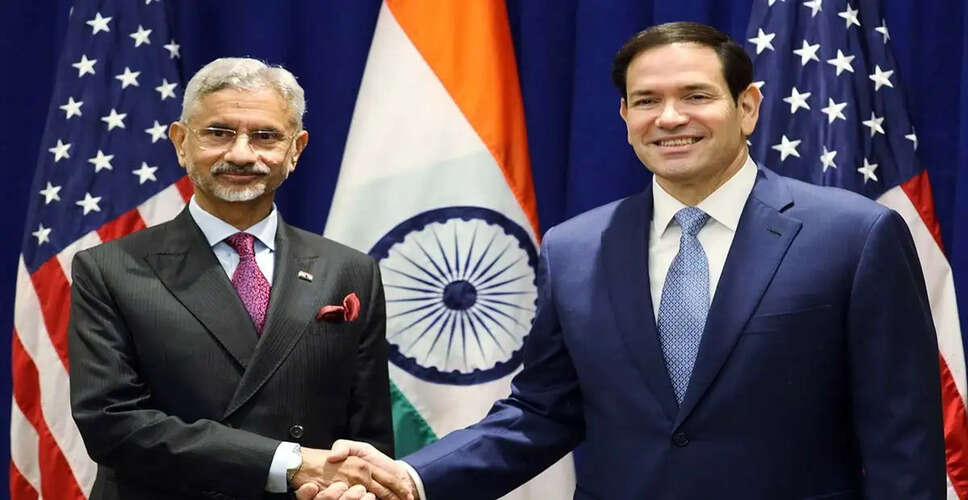

Quad Foreign Ministers Meeting Highlights Strategic Unity
The recent gathering of Quad foreign ministers has underscored the growing alignment among India, the United States, Japan, and Australia regarding power dynamics, supply chain security, and strategic collaboration in the Indo-Pacific region. While the focus of the meeting was on maintaining a free and open Indo-Pacific, the advancements in bilateral relations between India and its Quad partners have added significant strategic weight to this platform.
Bilateral Meetings Signal New Strategic Axis
In addition to the Quad discussions, India engaged in crucial bilateral meetings with the U.S., Japan, and Australia, signaling the rapid formation of a new strategic axis centered around India in the Indo-Pacific. These dialogues in New Delhi not only reflected diplomatic niceties but also conveyed clear strategic messages regarding China's aggressive expansionist policies, its dominance over global supply chains, and maritime power balance.
Key Achievements in U.S.-India Relations
Among the notable outcomes of the bilateral meetings was the signing of a new framework aimed at securing the supply and processing of critical minerals and rare metals between India and the U.S. This agreement, reached by Foreign Minister S. Jaishankar and U.S. Secretary of State Marco Rubio in New Delhi, seeks to enhance cooperation in mining, processing, recycling, and investment sectors. This partnership extends beyond mere economic collaboration, forming part of a broader strategy to secure supply chains essential for emerging technologies, artificial intelligence, defense production, and advanced manufacturing.
Expanding India-U.S. Strategic Partnership
The meeting between Jaishankar and Rubio also indicated that the India-U.S. relationship has evolved beyond just defense cooperation. Both nations described their partnership as a comprehensive global strategic alliance, with implications extending to other regions. Amid rising geopolitical tensions in West Asia, Ukraine, and the Indo-Pacific, their close collaboration is seen as a significant factor in influencing the global power balance.
Strengthening Ties with Japan
India's relationship with Japan has also seen renewed vigor. During discussions with Japanese Foreign Minister Toshimitsu Motegi, Jaishankar highlighted the special strategic and global partnership between the two nations, emphasizing their impact on regional stability and global order. The collaboration to maintain a free and open Indo-Pacific is deepening, with both countries recognizing the importance of securing maritime routes and energy imports amid rising tensions in West Asia.
Progress in India-Australia Relations
Significant advancements have also been noted in India's relations with Australia. Australian Foreign Minister Penny Wong stated in New Delhi that protecting sovereign choices and decision-making capabilities of nations in the Indo-Pacific is the core spirit of the Quad. She identified India as a key player in shaping the direction of the Indo-Pacific, reiterating Australia's commitment to enhancing cooperation with India in maritime security, critical infrastructure, and essential minerals.
Quad's Evolving Role in Strategic Partnerships
The increasing collaboration on critical minerals, maritime security, and supply chains within the Quad indicates that this group is evolving from a mere dialogue platform into a practical strategic partnership. India's role has become particularly crucial as it enhances technical and strategic cooperation with Western nations while maintaining its strategic autonomy. Australia's acknowledgment of Jaishankar's emphasis on sovereign choices illustrates India's balancing role in the power dynamics of the Indo-Pacific.
Broader Strategic Implications
The strategic significance of these developments is extensive. From securing the supply of critical minerals to safeguarding maritime routes, collaborating on artificial intelligence, and enhancing economic security and infrastructure development, India is emerging as a central pillar of the Indo-Pacific strategy. The deepening ties with the U.S., Japan, and Australia suggest that in the coming years, India will not only be a key foundation for regional stability but also play a decisive role in the global supply chain and technological power balance.