
Strait of Hormuz Tensions Escalate: US-Iran Conflict Deepens Amid Ceasefire Talks
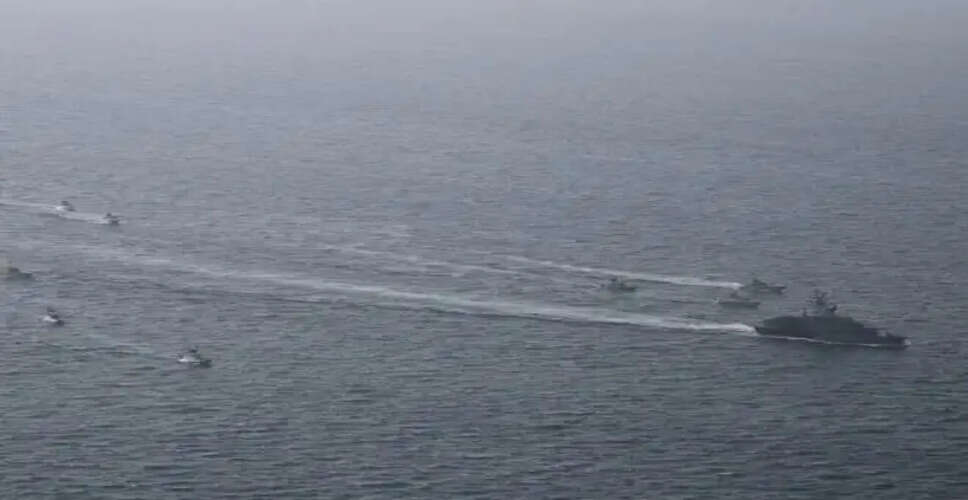

Rising Tensions in the Strait of Hormuz
Cairo: The ongoing blockades in the Strait of Hormuz have taken a dramatic turn as the United States intensifies its efforts to restrict Iranian ports, while Iran has reversed its earlier decision to reopen the waterway, resorting to firing upon a passing vessel.
The uncertainty surrounding this vital maritime route threatens to exacerbate the global energy crisis and escalate tensions between the two nations, despite mediators expressing optimism about reaching a new agreement.
Iran's military command announced that it has reinstated strict control over the Strait of Hormuz, indicating that it will continue to obstruct passage through the strait as long as the US maintains its blockade on Iranian ports.
Reports from the British military's United Kingdom Maritime Trade Operations center confirmed that Iranian Revolutionary Guard gunboats fired on a tanker navigating the strait, although the crew and vessel were reported safe.
Earlier, Iran had declared it was reintroducing restrictions on the strait in retaliation for the US blockade on its shipping activities, allowing only vessels it authorizes to pass.
Ebrahim Azizi, the head of Iran's National Security Commission, stated that the strait is reverting to its previous state, requiring Iranian naval approval and toll payments for transit.
This development followed a statement from Iran's Foreign Minister Abbas Araghchi, who had previously announced the strait's reopening amid a 10-day ceasefire between Israel and Hezbollah, an Iranian-backed group in Lebanon. Ending the conflict with Israel was a significant demand from Iranian negotiators, who accused Israel of violating a ceasefire with attacks on Lebanon.
US President Donald Trump initially seemed to support the reopening of the strait but later reaffirmed that the American blockade would remain in effect until a comprehensive deal is reached, including discussions on Iran's nuclear ambitions.
Despite a fragile ceasefire between the US and Iran, the ongoing disputes over the strait—through which approximately 20% of the world's oil typically flows—underscore the precariousness of the situation.
Control over this strategic waterway has become a crucial leverage point for Iran, prompting the US to deploy military forces and enforce a blockade on Iranian ports as part of efforts to secure a Pakistan-mediated ceasefire to end nearly seven weeks of conflict involving Israel, the US, and Iran.
According to data from Kpler, maritime movement through the strait remains limited to corridors that require Iranian consent.
Since the blockade's initiation on Monday, US forces have dispatched 21 ships back to Iran, as reported by US Central Command on social media.
Progress Towards a New Agreement
Despite the escalating situation in the Strait of Hormuz, Pakistani officials have indicated that the US and Iran are making strides toward a potential agreement ahead of the April 22 ceasefire deadline.
The ceasefire in Lebanon could eliminate a significant hurdle to reaching a deal. At a diplomatic forum in Antalya, Turkey, Pakistan's Foreign Minister Ishaq Dar remarked that the ceasefire in Lebanon is a positive development, noting that the conflict between Israel and Hezbollah had previously hindered negotiations in Islamabad, which had come very close to an agreement last weekend.
Pakistan's army chief, Field Marshal Asim Munir, visited Tehran, while Prime Minister Shehbaz Sharif held discussions with Turkish President Recep Tayyip Erdogan and Qatar's Emir Tamim bin Hamad Al Thani in Antalya. Pakistan is anticipated to facilitate a second round of talks between Iran and the US early next week.
Uncertainties Surrounding the Lebanon Ceasefire
While mediators remain hopeful, questions persist regarding Hezbollah's commitment to a truce it did not negotiate, especially as Israeli troops continue to occupy parts of southern Lebanon.
Trump stated that Israel is 'prohibited' by the US from conducting further strikes on Lebanon, asserting that 'enough is enough' in the conflict with Hezbollah.
The State Department clarified that this prohibition pertains only to offensive actions, not those taken in self-defense.
Shortly before Trump's statement, Israeli Prime Minister Benjamin Netanyahu acknowledged that Israel agreed to the ceasefire in Lebanon 'at the request of my friend President Trump,' but emphasized that the campaign against Hezbollah is ongoing.
He claimed that Israel has successfully destroyed around 90% of Hezbollah's missile and rocket stockpiles, asserting that Israeli forces have not yet completed their mission against the group.
In Beirut, displaced families began returning to southern Lebanon and the suburbs of Beirut, despite official warnings against returning home until the ceasefire's stability is confirmed.
The Lebanese army and UN peacekeepers reported sporadic artillery fire in some areas of southern Lebanon shortly after the ceasefire took effect.
The conflict, which commenced with US and Israeli strikes on February 28, has resulted in the deaths of at least 3,000 individuals in Iran, over 2,290 in Lebanon, 23 in Israel, and more than a dozen in Gulf Arab nations.