
Strait of Hormuz Remains Closed Despite Iranian Claims
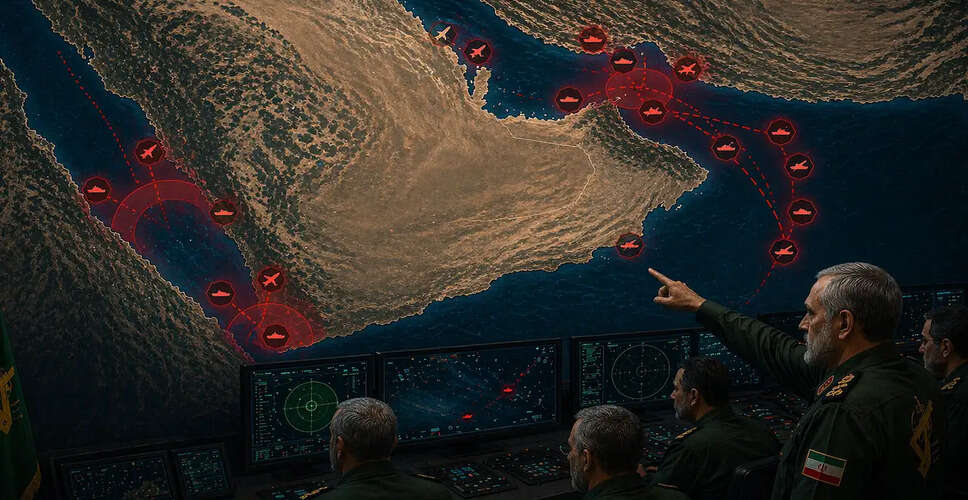

Current Status of the Strait of Hormuz
On Friday, Iran announced that the Strait of Hormuz was open for commercial navigation. However, vessel tracking data and analysis reported by CNBC indicate that the strait is effectively closed, with many tankers opting to turn back instead of attempting to transit.
Market Reactions to Iran's Announcement
What Happened On Friday
Following the declaration from Iranian Foreign Minister Seyed Abbas Araghchi that the strait was "completely open" during the ceasefire with the US and Israel, oil markets experienced significant fluctuations. West Texas Intermediate crude dropped by 12 percent, settling at $83.85 per barrel, while Brent crude futures fell by 9 percent.
araghchi
2045121573124759713
Despite the market's initial excitement, the reality on the water told a different story.
Confusion Over Passage Conditions
Mass turn around, nearly every ship attempting the crossing has turned back. pic.twitter.com/lHBOOMLw6G
— OSINTtechnical (@Osinttechnical) April 17, 2026
Several tankers and cargo vessels tried to navigate the route designated by Iran around Larak Island but quickly reversed course. Matt Smith, a commodity research director at Kpler, noted that these vessels had not received the necessary clearance to proceed.
Mixed Signals from Tehran
Mixed Signals From Iran
The confusion arises from conflicting messages from Tehran. While Araghchi's statement indicated an opening, Iranian media linked to the Revolutionary Guard quickly outlined conditions for passage that resemble existing restrictions. A source close to Iran's Supreme National Security Council informed Tasnim News that commercial vessels must adhere to Tehran's designated routes and coordinate with its military. Ships associated with nations deemed hostile by Iran are barred from passage.
Tomer Ranaan, a maritime risk analyst at Lloyd's List Intelligence, expressed uncertainty about any significant changes, stating that Iran still desires ships to transit through its territorial waters.
Ongoing US Naval Blockade
Adding to the complexity, President Trump confirmed that the US naval blockade of Iran remains enforced. Tehran has warned that it will close the strait if the blockade is not lifted.
The Strait's Practical Status
Is The Strait Open Or Not?
Matthew Wright, a senior freight analyst at Kpler, bluntly stated that the situation represents a "false dawn," asserting that the strait remains effectively closed despite diplomatic signals. The world's largest shipping association, BIMCO, supported this view, advising vessels to avoid the strait due to the persistent threat of mines. Jakob Larsen, BIMCO's chief security officer, emphasized that the area is "not declared safe for transit at this point."
Consequences for Global Oil Supply
The Real World Impact
While diplomatic interactions between Washington and Tehran can influence oil futures, they do not resolve the tangible issue of disrupted energy supplies. Analysts caution that the repercussions will worsen with time. The last oil and product tankers that left the Persian Gulf before the strait's closure have now reached their destinations across Asia, Europe, and North America. One of the final shipments, a tanker carrying Iraqi crude, is expected to arrive in Long Beach, California, next week. The implications will begin to accumulate from this point onward, with refineries in Asia, heavily reliant on Middle Eastern oil, likely forced to reduce production. Countries depending on Asian refineries for products like jet fuel may soon experience supply shortages as a result.
Future Outlook
What Comes Next
A return to normal shipping operations through the strait is not anticipated in the near future. It may take months, with major shipping companies likely waiting to see how the situation unfolds before committing to the route.