
Sonia Gandhi Calls for Urgent Reforms for Women Frontline Workers
Sonia Gandhi has raised concerns regarding the challenges faced by women frontline workers, including ASHA and Anganwadi workers, during a recent parliamentary session. She called for urgent reforms to improve their working conditions, highlighting issues such as low wages and staff shortages that hinder essential services for mothers and children. Gandhi's appeal emphasizes the need for government action to ensure timely remuneration and fill existing vacancies, aiming to enhance the effectiveness of health and nutrition programs across the country. Her advocacy seeks to empower these vital workers who play a crucial role in public health and child development.
| Dec 16, 2025, 16:23 IST
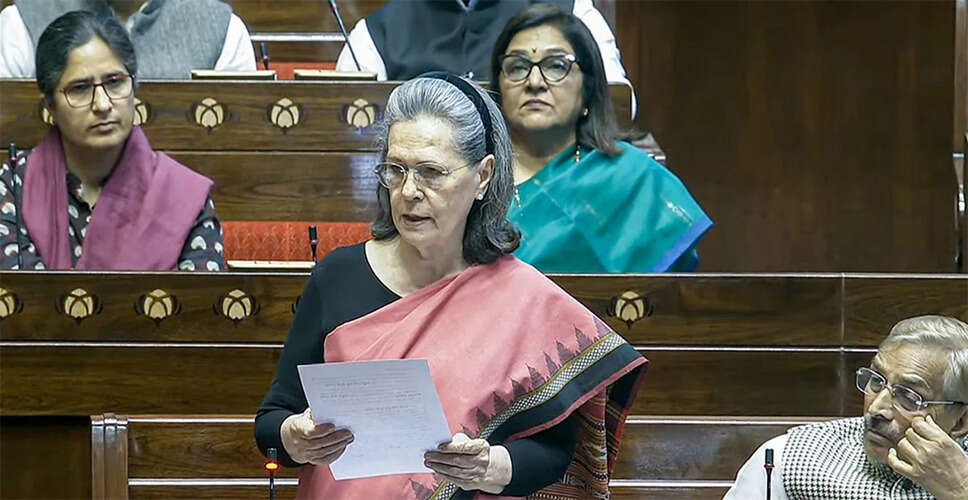
Sonia Gandhi Highlights Plight of Women Workers
On Tuesday, Sonia Gandhi, the former president of the Congress party and a member of the Rajya Sabha, brought attention to the struggles faced by millions of women frontline workers during zero hour. She urged for immediate reforms to support Accredited Social Health Activists (ASHA), Anganwadi workers and helpers, as well as community resource persons under the National Rural Livelihood Mission (NRLM).
Gandhi emphasized the significance of these government initiatives for women's empowerment but expressed disappointment that, despite their essential roles in public health, nutrition, and child development, these workers continue to face excessive workloads, low wages, and a lack of recognition. She pointed out that ASHA workers, classified as volunteers, manage critical tasks such as vaccination drives, maternal health support, and family welfare programs, yet receive minimal social security and low remuneration.
The Congress leader noted that Anganwadi workers and helpers, who play a central role in the Integrated Child Development Services (ICDS) scheme, receive a basic monthly remuneration of approximately ₹4,500 for workers and ₹2,250 for helpers from the central government, with additional amounts occasionally provided by states. She highlighted the existence of around 300,000 vacancies at various levels of ICDS across the country, resulting in millions of children and mothers being deprived of essential nutrition, health check-ups, and early education services.
Gandhi also pointed out the impact of staff shortages on service delivery, stating that in addition to low pay, there are currently about three lakh vacancies at different levels within ICDS. These shortages lead to millions of children and mothers missing out on vital services. Even when these positions are filled, they often fall short of population standards due to the lack of updated census data since 2011.
She urged the government to prioritize measures in collaboration with states, which include filling all existing vacancies, ensuring timely remuneration for all staff, doubling the central government's contribution to the salaries of these frontline workers, appointing an additional ASHA worker in villages with populations over 2,500, and increasing the number of Anganwadi workers to enable early childhood education alongside current nutrition and health initiatives.