
Somaliland's Strategic Importance Sparks Concerns in Iran

Understanding Somaliland's Position
Located in the Horn of Africa, Somaliland is a self-proclaimed independent entity that lacks widespread international recognition. However, analysts suggest that its growing ties with Western nations and Israel are causing significant unease in Iran. This apprehension stems from Somaliland's geographical position, military access, and its potential to shift regional power dynamics.
Iran's Perception of Threat
Iran has historically depended on the Houthi militant group in Yemen to extend its influence across the Red Sea, particularly through the crucial Bab-el-Mandeb Strait. With the Strait of Hormuz largely inaccessible, this route has become vital for oil transportation from the Middle East to Asia. Control over this area equates to substantial leverage.
Somaliland's strategic location near this strait, along with its deep-water port and airbase, poses a potential challenge to Iran's operations. Should the United States, Israel, or other Western allies establish a military presence there, it could significantly undermine Iran's ability to utilize the Houthis for threats against maritime activities.
Lisa Daftari, a Middle East expert, articulated to a news outlet that Iran perceives Somaliland as a possible pro-Western and pro-Israel stronghold that could diminish Tehran's influence over Red Sea shipping through its Houthi proxies. The Houthis have already issued threats against any Israeli or Western military presence in Somaliland, warning they could disrupt shipping in the strait if tensions escalate.
Recent Developments
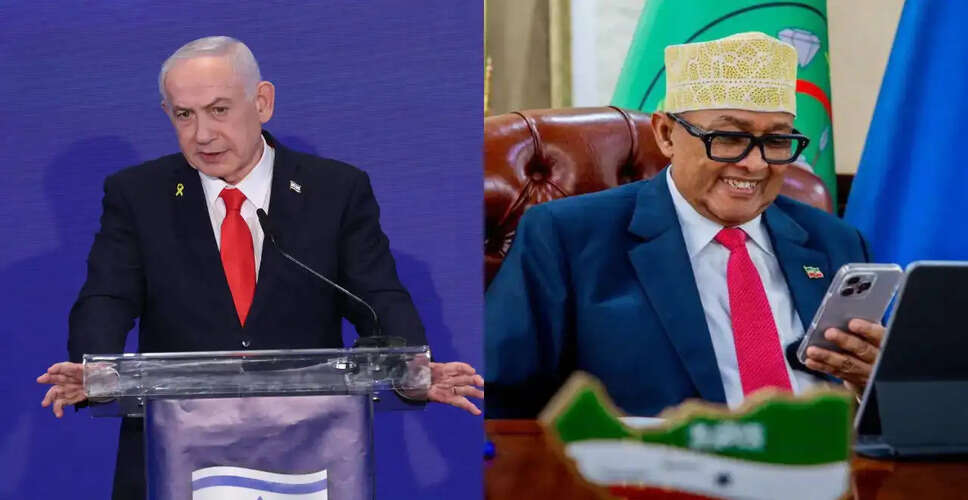
In December of the previous year, Israel became the first nation to officially recognize Somaliland's independence, a move that was reciprocated by Somaliland. This recognition has raised alarms in Tehran.
Edmund Fitton-Brown, a senior fellow at a defense think tank and former British ambassador to Yemen, noted that Iran's opposition to Somaliland's recognition is largely due to Israel's involvement, as Tehran typically resists anything that Israel supports. He characterized Somaliland as a potential base for operations against the Houthis, posing a direct threat to what Iran refers to as its Axis of Resistance.
Concerns Regarding Djibouti
The United States maintains a significant military base in Djibouti, located on the Red Sea. However, Fitton-Brown expressed concerns about the reliability of this partnership, given China's expanding military and commercial presence in Djibouti, which could complicate U.S. interests in the region. He suggested that Somaliland's moment may be approaching.
Somaliland's Offers to the U.S.
Somaliland is proactively seeking to strengthen its ties with the U.S. Its Foreign Minister, Abdirahman Dahir Adam, reiterated the government's longstanding offer to grant the United States access to its coastline, emphasizing that this offer is valid during both peaceful and tense times. Additionally, Somaliland is reportedly willing to provide storage for Tomahawk missiles, presenting it as a strategic move to enhance mutual security interests. Adam highlighted that U.S. destroyers in the Red Sea currently face lengthy resupply times, and Somaliland could alleviate this issue.
U.S. Response
The White House has indicated that Operation Epic Fury has successfully weakened Iran's proxies, leading to economic pressure on Iran, which provides leverage for ongoing negotiations. On Capitol Hill, Senator Ted Cruz has advocated for the U.S. to formally recognize Somaliland as an independent state, citing its potential as a counterterrorism ally and its strategically advantageous location. The future of Somaliland's recognition remains uncertain, but as tensions in the Red Sea persist, this small African territory is becoming increasingly significant in global geopolitical discussions.