
Women in Sivasagar Face Struggles Amid Ongoing Flood Crisis
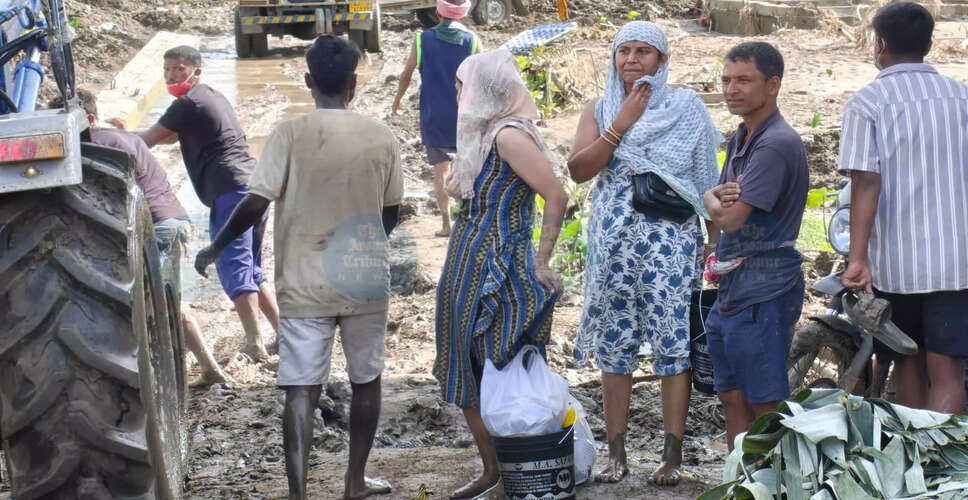

Challenges Faced by Women in Flood-Affected Areas
Women and adolescent girls are trying to cope with menstruation, pregnancy, childcare and the absence of privacy
Sivasagar, Aug 1: Two weeks after severe flooding displaced numerous families in Sivasagar, many women survivors express that their primary concern has shifted from securing food to maintaining their dignity.
As floodwaters remain high in various villages, makeshift settlements have emerged along highway shoulders, covered with blue tarpaulin sheets.
In these temporary shelters, women and adolescent girls are grappling with issues related to menstruation, pregnancy, childcare, and a lack of basic privacy.
While relief efforts have predominantly focused on food distribution, rescue, and rehabilitation, women residing along the roadsides report that their needs for sanitation, menstrual hygiene, safety, and support for pregnant women have been largely overlooked.
Many displaced women voiced a common sentiment: "Food alone is not sufficient. We also need to live with dignity."
The absence of temporary toilets has compelled them to seek secluded spots for relief, often jeopardizing their safety and privacy.
Anima Borkakati, a resident of Bishnunagar in Joysagar, shared her struggle to manage her menstrual cycle while living on the roadside after her home was submerged.
She explained that the lack of temporary toilets has forced women to relieve themselves wherever possible, leading to health issues and a loss of privacy.
"I have been on my period for the last four days. Look at how we are living. Our home is underwater, and now the roadside has become our home. We have never had to live like this before. The flood left us with no choice," she lamented.
For Disha Kalita, a Class XII student, the floods have stripped away the sense of normalcy. She noted that women and girls struggle daily to change clothes, maintain hygiene, and find private spaces for using the toilet, despite receiving relief supplies.
"You can see us sitting on the roadside. We wear whatever clothes relief volunteers give us. Sometimes I wonder whether we are even being treated as human beings anymore. We are living alongside cattle and goats," she remarked.
Kalita mentioned that nights are particularly challenging, as families from various villages share makeshift roadside shelters, leaving many girls too frightened to sleep.
Mosquitoes exacerbate their discomfort, and the lack of private spaces makes menstruation especially challenging. She recalled how her younger sister broke down after getting her period due to the absence of a private area to manage it.
"We never imagined we would live through days like these. The Government should have paid more attention to the needs of women," she expressed.
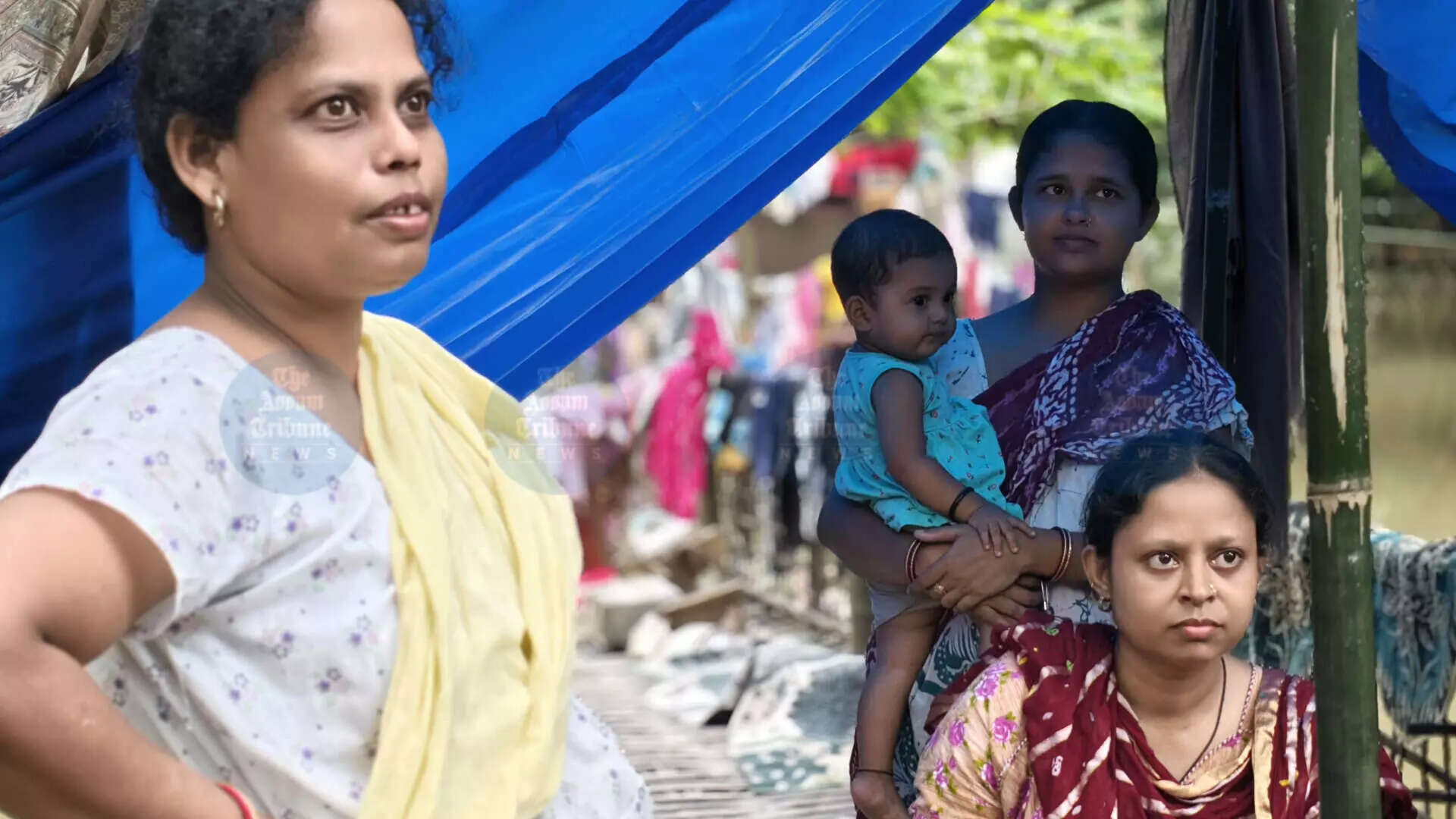
Highway shoulders covered with blue tarpaulin sheets have turned into makeshift settlements. (Photo credit: Kongkon Bordoloi)
Expectant mothers also report feeling abandoned, as healthcare access has been disrupted and many roadside shelters lack separate facilities. They worry not only about their unborn children but also about where they can safely rest, eat, or use a toilet.
Hafiza Begum, who is pregnant, mentioned that she was rescued by boat from her flooded home but received no special assistance afterward.
"No arrangements have been made for pregnant women. That is why I have decided to go to my mother's house," she stated.
As of July 31, official figures indicate that nearly 27,700 women and 7,100 children have been affected in Sivasagar district alone.
Throughout Assam, 5,628 women and 1,620 children are currently residing in relief camps, with 5,034 women and around 1,400 children in Sivasagar's camps.
For countless women in the flood-affected districts of Upper Assam, the crisis continues even after the waters have receded.
Each day presents new challenges regarding privacy, safety, hygiene, and healthcare—needs that many women assert are just as crucial as food and shelter.