
Celebrating Kamrupi: A Creative Gathering at Barnagar College

Exploring Kamrupi Dialect Through Art and Culture
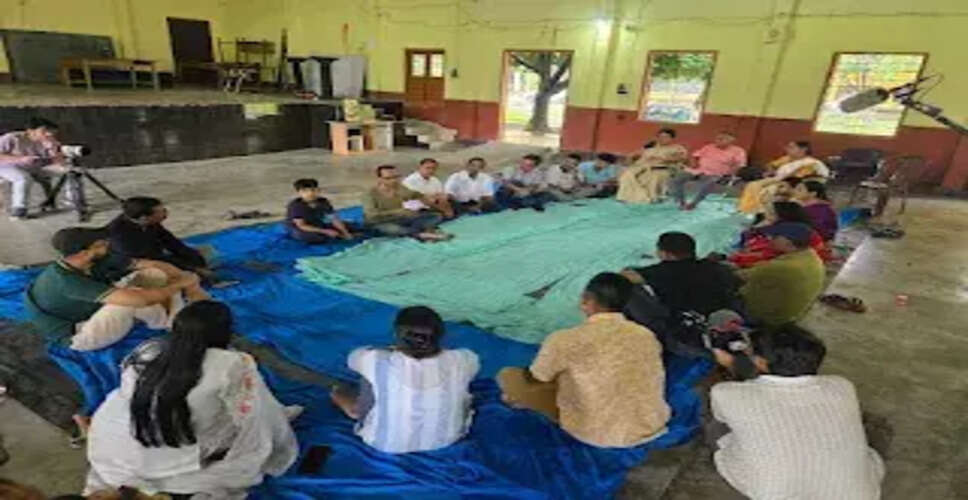
Artists, writers, cultural practitioners and digital content creators participate in a programme on creative expression in the Kamrupi dialect at Barnagar College, Sorbhog (Photo- Meta)
Guwahati, July 21: A diverse group of artists, writers, cultural figures, and digital creators engaged in the Kamrupi dialect convened at Barnagar College in Sorbhog to delve into the creative and intellectual endeavors associated with this dialect.
The gathering featured discussions among practitioners from various fields, including literature, art, culture, and digital media, who shared their insights on utilizing Kamrupi for meaningful creative expression. The conversations highlighted both the opportunities and challenges of working with a non-standardized linguistic form, particularly its struggle for cultural legitimacy compared to standard Assamese.
Dr. Amiya Mahanata presented her efforts in compiling a dictionary of regional vocabulary. YouTube creator Riki Bharali shared his mission to document and promote traditional culinary practices from western Assam, voicing concerns over the diminishing knowledge of local dishes among the youth.
Cartoonist Nituparna Rajbangshi discussed how he portrays Kamrupi culture through his artwork, while filmmaker Kangkan Deka showcased his film Upasarga, emphasizing the potential of the Kamrupi dialect in serious cinema. Poets Jugajyoti Das, Ajay Kumar Ray, and Ziaul Islam recounted their experiences of writing in Kamrupi and publishing their works in various magazines.
This event was part of a project spearheaded by Jyotirmoy Talukdar from Ashoka University, implemented by the India Foundation for the Arts under its Arts Practice program, with support from HudumDeo.
HudumDeo is a socio-cultural organization dedicated to researching, restoring, and promoting Assam's folk art, literature, and cultural heritage. It also facilitates discussions surrounding local art, language, literature, and indigenous traditions.
The initiative aims to unify a largely unorganized community of Kamrupi speakers, whose language has often been culturally marginalized. By establishing a common platform for artists, writers, and researchers, the project aspires to bolster confidence among speakers and encourage the use of Kamrupi in both creative and everyday contexts.
Talukdar noted that the project also aims to combat the negative stereotypes associated with Kamrupi, which is often depicted as a language used for comedic purposes through exaggerated accents and caricatures. Such representations have impeded its acceptance as a valid medium for literary, artistic, and intellectual expression.
The initiative encourages practitioners to express local narratives in their native language rather than feeling pressured to conform to standard Assamese due to its broader institutional acceptance. Organizers highlighted that the expanding reach of digital media presents new avenues for documenting, preserving, and promoting linguistic traditions like Kamrupi.