
Slovakia's Prime Minister Advocates for Dialogue with Russia Amid EU Tensions
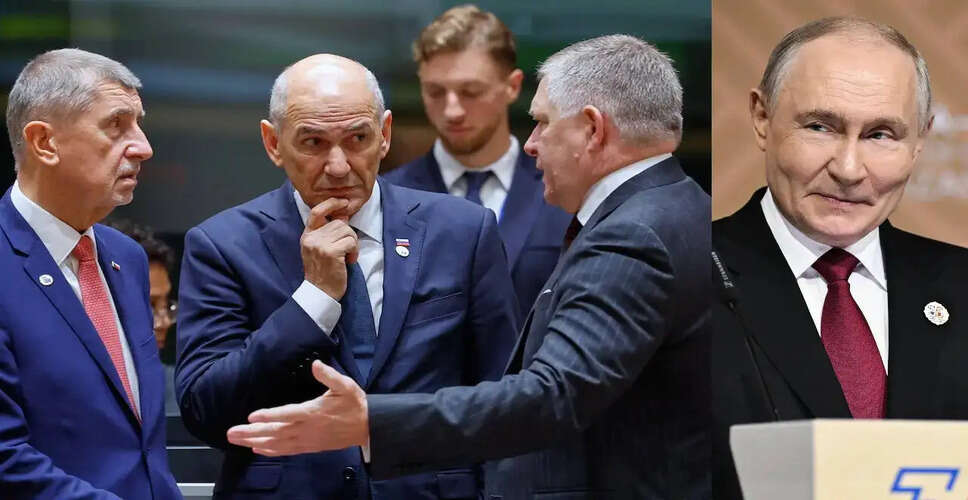

Fico Calls for Direct Diplomacy with Moscow
Robert Fico, the Prime Minister of Slovakia, has reiterated his appeal to the European Union to de-escalate tensions and engage in direct talks with Moscow. In a video message to the public on Saturday, he emphasized his commitment to not missing any opportunity to converse with Russian President Vladimir Putin. Despite significant disagreements, he also mentioned maintaining communication with Ukrainian President Volodymyr Zelenskyy, asserting that Slovakia is a nation committed to peace and international law, while criticizing what he perceives as the EU's inconsistent policies.
This statement comes as European leaders have taken a firmer stance. Earlier this month, Zelenskyy outlined five prerequisites for any potential resolution:
- An immediate ceasefire.
- The current front line to serve as the basis for negotiations.
- Legally binding security assurances for Ukraine.
- Frozen Russian assets until reparations for war damages are made.
- Protection of broader European security interests.
Fico Urges Europe to Favor Negotiation Over Military Action
Fico's perspective diverges from the prevailing sentiment. He has consistently argued that Europe should prioritize negotiations instead of military support, claiming that the continent cannot afford to be marginalized while the U.S. and Russia dictate the terms. He advocates for a new, Europe-driven peace initiative rather than increasing pressure on Russia. Fico highlights the humanitarian toll of the conflict, asserting that the current Western approach of supplying arms to Ukraine has not succeeded, and any lasting agreement must consider security for both Ukraine and Russia.
Fico Criticizes EU's Energy Strategy
Energy policy is central to Fico's concerns. He has labeled the EU's strategy to reduce reliance on Russian gas and oil as "energy suicide" and, alongside Hungary, has initiated legal action against the EU regarding the REPowerEU regulation. The European Commission, however, argues that the strategy is effective, noting that the EU's dependency on Russian gas has decreased from 45% before the conflict to an anticipated 12% by 2025. New regulations prohibiting short-term pipeline gas contracts took effect on June 17, 2026, with longer-term contracts to follow.
Fico's outreach to Moscow is not merely symbolic; he met with Putin in May during Victory Day celebrations, where the Kremlin acknowledged Slovakia's "independent foreign policy" and expressed interest in ongoing energy collaboration. Fico conveyed Putin's stance that any meeting with Zelenskyy would necessitate a call from Kyiv to the Kremlin first. However, the likelihood of his appeal gaining traction remains uncertain. Ukraine's EU accession discussions commenced their first negotiation cluster this month, with most EU member states supporting Kyiv's position that negotiations should be conducted from a position of strength rather than concession.
Currently, Fico, often aligned with Hungary's Viktor Orban, stands as the most vocal dissenting figure within the EU, betting that escalating energy costs and war fatigue will eventually lead Europe back to the negotiating table he believes it has forsaken.