
Sikkim Enhances Disaster Preparedness After Glacial Lake Flooding

Strengthening Disaster Response in Sikkim
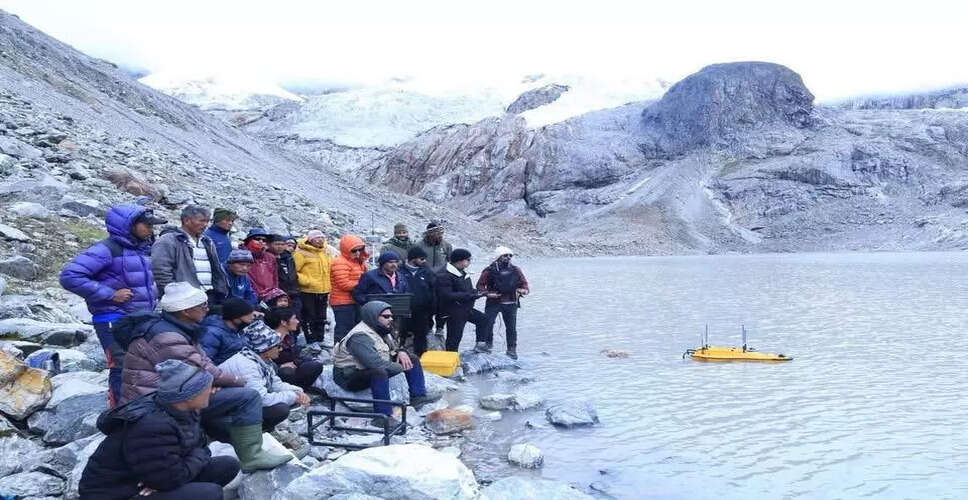
Automated weather stations, telemetry networks & real-time lake monitoring systems are now in place along the Teesta corridor. (AT Photo)
Gangtok, Sept 13: In response to the catastrophic South Lhonak Glacial Lake Outburst Flood (GLOF) that occurred in October 2023, the Sikkim Government has significantly enhanced its disaster preparedness initiatives.
The Commission on Glacial Hazards, under the leadership of Dr. Akhilesh Gupta, presented a detailed report to Chief Minister Prem Singh Tamang on Tuesday.
This report includes eight essential recommendations aimed at improving the state's resilience, response strategies, and infrastructure safety against the threats posed by high-altitude glaciers.
To address immediate risks, technical teams are implementing solar-powered pumping systems to reduce water levels at Shako Chho Lake, which is classified as a Category A hazard and is situated 13 km upstream from Thangu village.
Tamang assured that his government would promptly execute the proposed strategies to position Sikkim as a leader in climate resilience within the Himalayan region.
Additional measures involve constructing a culturally appropriate moraine plug-wall at the Gurudongmar Complex, establishing a flood-retention structure at Dolma Sampa in the Lhonak Valley, and closely monitoring the rapid growth of the Jumthul Phuk Glacial Lake.
Along the Teesta River corridor, automated weather stations, telemetry networks, and real-time lake monitoring systems have been set up, complemented by extensive multi-hazard assessments conducted by the Geological Survey of India.
Power developers such as NHPC and Greenko are incorporating their projects into the central E-AABHAS flood-warning system while upgrading infrastructure at Teesta-III.
A collaborative review involving state departments, central agencies, defense forces, technical institutions, and hydroelectric power developers focused on statewide GLOF mitigation, early warning systems, and advanced hazard monitoring.
Chief Secretary Telang highlighted the importance of effective safety measures, urging all parties to ensure smooth inter-agency collaboration and conduct regular mock drills to facilitate quick community alerts during emergencies.
The report was handed over following a high-level coordination meeting led by Chief Secretary R. Telang on September 10 at the Tashiling Secretariat.