
Sikkim Celebrates Bada Dashain: A Festival of Unity and Tradition
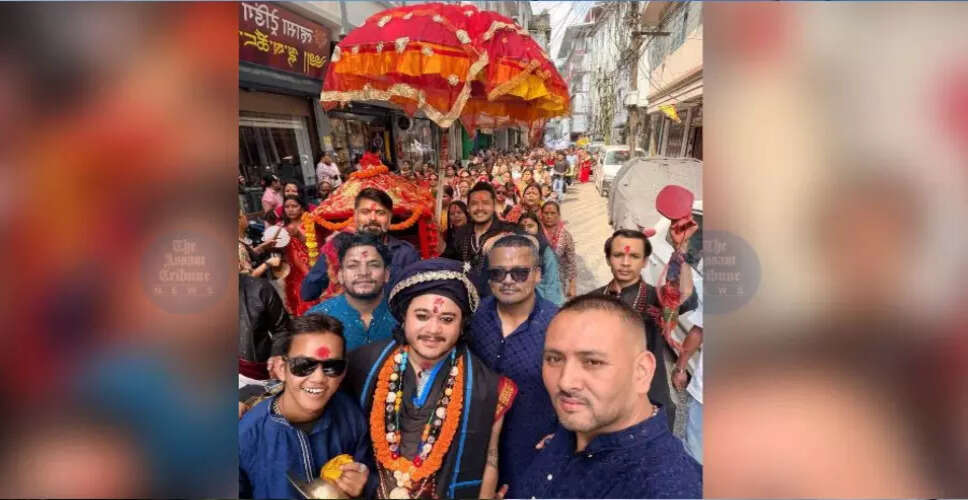

Bada Dashain Celebrations in Sikkim
Traditional Fulpati Shobha Yatra
Chief Minister Prem Singh Tamang conveyed his best wishes to the citizens, invoking Goddess Durga's blessings for peace, prosperity, and happiness.
He expressed, “May Maa Durga bestow her blessings upon Sikkim and its people, ensuring peace and prosperity in everyone’s lives.”
Highlighting the importance of unity, Tamang encouraged individuals to leverage the festival to enhance social connections and foster a community grounded in respect, equality, and justice.
He stated, “Let us unite to strengthen our relationships and strive towards a society that values respect, equality, and justice for all,” expressing hope that traditions would enhance progress and that unity would serve as a source of strength.
In contrast to Dussehra and Bijoya Dashami celebrations in other parts of India, which often involve the burning of effigies and immersion of Durga idols, Bada Dashain is celebrated by Nepali Hindus across India, Nepal, and Bhutan over a span of 15 days, concluding on Kojagrat Purnima, the full moon night.
For many families in Sikkim, Bijoya Dashami represents a significant moment in the festival, leading to days filled with visits to relatives and ancestral homes.
During this time, elders apply Tika, a sacred blend of red vermilion, rice, and curd, on the foreheads of younger family members, placing fresh Jamara, yellow shoots from barley seeds, behind their ears.
These rituals are accompanied by blessings for health, prosperity, and longevity, often including cash gifts known as Dakshina.
The celebrations kick off with Ghatasthapana, a ritual involving the sowing of barley seeds in a holy pot kept in a dark room. The resulting shoots, known as Jamara, hold significant religious importance and are central to the blessings exchanged during Dashain.
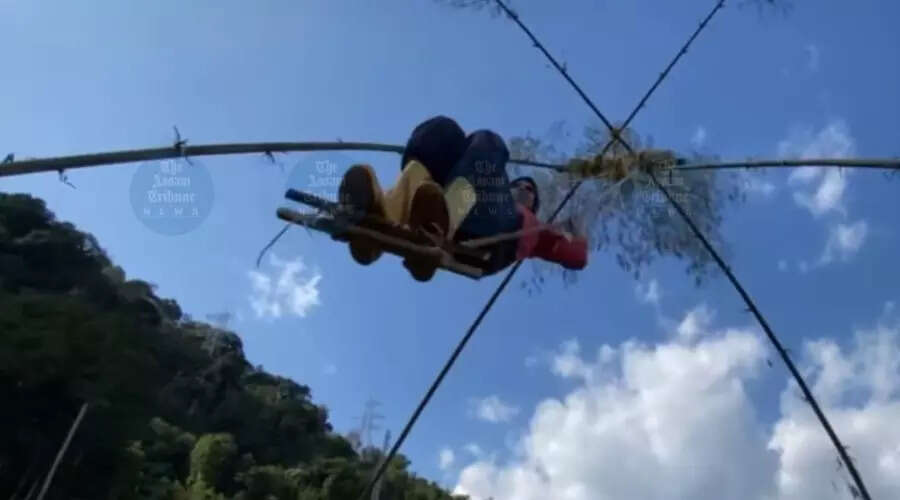
A traditional Lingay ping that is constructed during the Dashain festival
Fulpati, celebrated on the seventh day, signifies another key event. Nine sacred plants, symbolizing the nine forms of Goddess Durga, are tied together in traditional red cloth and carried into prayer rooms in processions accompanied by traditional music and sacred chants.
The festivities continue through Maha Ashtami and Maha Navami, with homes being cleaned, whitewashed, and adorned with marigold garlands, while Chandi recitations and prayers are integral to the observances.
Pawan Chamling, president of the SDF and former chief minister, also shared his greetings, emphasizing the festival’s message of truth and righteousness.
He remarked, “We celebrate this festival as a testament to the victory of truth over falsehood and light over darkness,” expressing hope that the occasion would motivate people to uphold noble values.
On Maha Ashtami, the Newar community partakes in Kuchi Bhay, a traditional feast meaning “a feast of two measures of grain.” This event occurs on the eighth evening of Dashain after household prayers, bringing family members together to share a meal served on banana leaves, seated according to seniority.
The meal features two portions of chiura (beaten rice), accompanied by 12 vegetable dishes and 12 pieces of choila (spiced roasted meat), along with potato pickle, black lentils, fermented greens, and traditional rice liquor known as aila. Before dining, a small portion of each dish, referred to as dyo chaye, is offered to deities and ancestors.
Beyond its religious significance, Dashain serves as a time for Sikkimese individuals living elsewhere in India and abroad to return to their native villages, reuniting with family and friends.
As residents travel to their ancestral homes, major towns and cities often quiet down, while villages come alive with traditional celebrations.
“During Dashain, we don’t have any local customers; only tourists use our service,” noted Bittu Chettri, a local taxi driver.
Although Bijoya Dashami marks the tenth day, the festivities persist as families visit relatives, exchange blessings, and reinforce bonds until Bada Dashain concludes on Kojagrat Purnima.
This extended celebration remains a cherished expression of faith, family ties, and cultural identity throughout Sikkim.