
Significant Role of MSME Sector in India's Economy Highlighted in Rajya Sabha
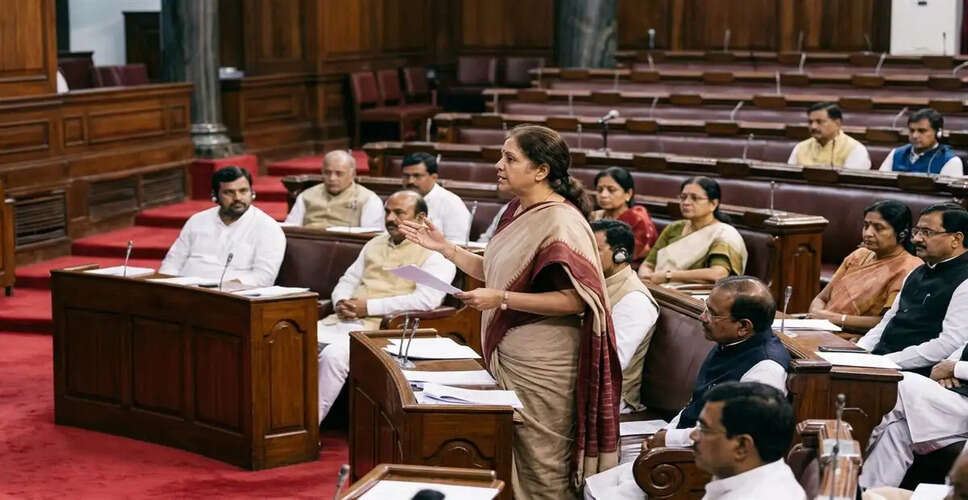

Discussion on MSME Development Bill in Rajya Sabha
New Delhi, August 3 - During a session in the Rajya Sabha, members emphasized the crucial contribution of the Micro, Small, and Medium Enterprises (MSME) sector to the nation's economy, noting its vital role in alleviating unemployment. While discussing the Micro, Small, and Medium Enterprises Development (Amendment) Bill 2026, BJP's Sumitra Walmik stated that the legislation aims to integrate marginalized communities into the mainstream. She highlighted the significant impact of rural areas on the economy and asserted that this bill would greatly benefit these regions.
Walmik pointed out that small industries are thriving through minor savings. She mentioned that the Lakshmi Didi scheme has proven to be a boon, aiming not just to provide jobs but to empower millions of rural women to earn substantial incomes annually.
The bill was introduced in the house on July 28 by the Minister of MSME, Jitan Ram Manjhi. Dola Sen from the Trinamool Congress remarked that the MSME sector could effectively combat unemployment. She criticized the government for not addressing the concerns of both the unemployed and those currently employed, suggesting that while the bill is being introduced, the government is simultaneously promoting privatization and corporatization.
Dr. Santrupt Mishra from BJD noted that MSMEs contribute 35% to the GDP, but the path is fraught with challenges. He pointed out that the original bill was enacted in 2006, and it has taken twenty years for amendments to be proposed, during which significant changes have occurred in the MSME sector.
He expressed concern that the bill does not address the major challenges faced by MSMEs. Gollababu Rao from YSR Congress praised the new rules established for mediation and quick resolution of decisions, emphasizing the importance of adherence to these rules to avoid delays in justice. M. Thambidurai from AIADMK stressed the necessity of MSMEs for national development and urged the central government to support MSME initiatives in Tamil Nadu.
Rajendra Hiralal Jain from NCP supported the bill, stating that MSMEs are the backbone of the economy and that this legislation would empower them. He described the bill as a document of commitment towards a developed India, aiming to facilitate the promotion and growth of micro, small, and medium enterprises.
Mastan Rao Yadav from TDP also backed the bill, noting that it proposes several amendments to the original 2006 law, reflecting the government's ongoing focus on enhancing smooth business operations for small companies. He mentioned that the proposed legislation mandates that mediation decisions be issued within 90 days of the completion of legal proceedings, ensuring swift resolution of disputes related to MSMEs.
Ravichandra Vaddiraju from BRS supported the bill, highlighting that it allows mediation and arbitration processes to be conducted online, facilitating quicker, more accessible, and efficient dispute resolution. He noted that these measures aim to reduce prolonged litigation and enhance debt recovery for small and medium enterprises.
Ramji from BSP raised concerns about the lack of provisions for children working in the MSME sector, advocating for their right to education. He urged the government to consider providing reservations for marginalized groups in the private sector. The discussion also saw contributions from Pramod Boro of UPL (L), Sanjay Seth of BJP, Neeraj Dangi of Congress, Praveen Chakravarty, and Sulata Dev from BJD.