
Significant Rise in Drone Intrusions Along India-Pakistan Border Reported for 2025
Drone Incursions on the Rise
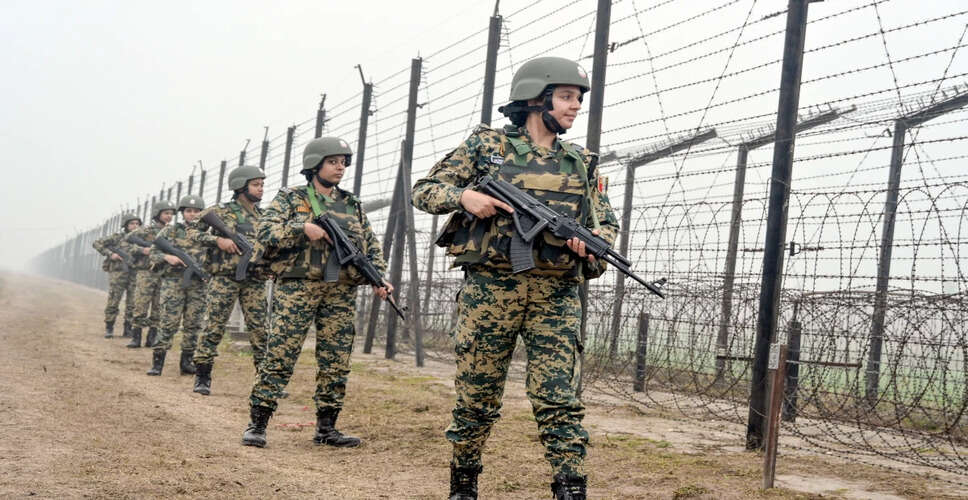
In 2025, a total of 791 incidents of drone intrusions were recorded along the international borders of Jammu and Kashmir, Punjab, and Rajasthan, as reported by the Ministry of Defence on Wednesday. Out of these, nine incidents occurred at the international border in Jammu and Kashmir, while the majority, 782 incidents, were noted in Punjab and Rajasthan.
Effective Countermeasures
The ministry highlighted that the effective deployment of 'spoofers and jammers' on the western front has significantly mitigated the threat posed by drones. In its year-end review statement, it was noted that the Indian Army successfully shot down 237 drones in the international border area during this period, which included five drones carrying explosives, 72 loaded with narcotics, and 161 that were unladen.
Security Situation Under Control
According to the ministry, the relentless efforts of the Indian Army have ensured that the security situation in Jammu and Kashmir remains 'completely under control.' It was mentioned that the local populace has chosen the path of development and is actively participating in various initiatives led by the government and the army. The ministry also stated that there has been a noticeable reduction in violence levels, fewer protests, and no incidents of stone-pelting.
Pakistan's Strategy and Future Goals
The annual review indicated that Pakistan has attempted to activate the Poonch-Rajouri region as a 'center for proxy warfare' during 2023-24. Consequently, clear objectives for 2025 have been established, which include maintaining a robust anti-infiltration grid, conducting continuous operations in mid and high-altitude areas to either neutralize or force terrorists to flee, and creating a conducive environment for development to reduce local recruitment of terrorists.
Ongoing Threats and Countermeasures
The ministry pointed out that the operational concerns regarding the presence of terrorists at launch pads and their persistent attempts to infiltrate are indicative of Pakistan's unwavering intent to advance its 'proxy warfare strategy.' It was noted that Pakistan is attempting to exploit the international border not only for smuggling weapons and narcotics via drones but also for the infiltration of a significant number of terrorists.
Technological Advancements in Defense
In light of current operational challenges, approvals have been granted for emergency procurement in specific technological areas, including drone and anti-drone systems, weapon systems, precision ammunition, electronic warfare systems, and surveillance systems. According to the annual review statement, contracts for a total of 29 capability development plans have already been finalized.
Self-Reliance in Drone Manufacturing
Regarding self-reliance in drone manufacturing and ammunition production, the ministry stated that '515 Army Base Workshops and select Corps Z Workshops/EME Battalions have established reliable drone manufacturing capabilities with the help of internal expertise and subject matter experts.' These facilities are state-of-the-art and meet the quality requirements for drones. So far, a total of 819 drones have been produced by EME units, including 193 surveillance drones, 337 kamikaze/armed drones, and 289 piloted visual drones.
Historical Context of Border Intrusions
Looking back at last year's figures, the government informed the Lok Sabha that the highest number of infiltration attempts were recorded along the India-Bangladesh border, with 7,528 cases documented until 2024. This was followed by 425 cases along the India-Pakistan border, 298 along the India-Myanmar border, and 157 incidents along the India-Nepal and Bhutan borders. Notably, there were no reported cases of infiltration along the India-China border during this period.
Data on Infiltration Attempts
In a written response to the Lok Sabha, Minister of State for Home Affairs Nityanand Rai shared year-on-year data emphasizing the continuous monitoring and surveillance of India's international borders. Presenting detailed statistics, Rai noted that infiltration attempts along the India-Bangladesh border peaked at 977 cases in 2024, while 41 cases were recorded along the India-Pakistan border. Additionally, there were 37 incidents in India-Myanmar and 23 cases in India-Nepal and Bhutan in 2024. Once again, he reiterated that no infiltration cases were reported along the India-China border.