
Significant Improvement in Maternal and Child Health in Dibrugarh District

Positive Trends in Maternal and Child Health
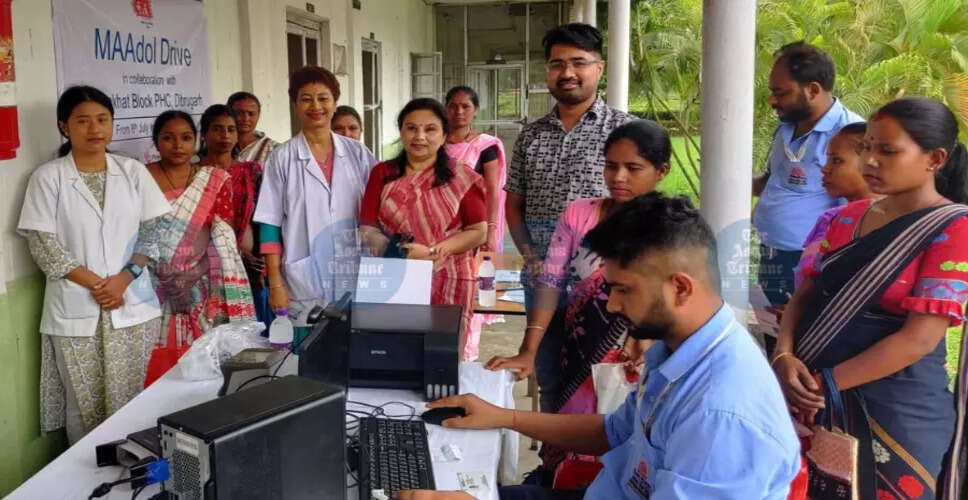
Maternal health camp in Dibrugarh (Photo: AT)
Dibrugarh, Sept 15: The Dibrugarh district has witnessed a notable reduction in maternal and child mortality rates, particularly in tea garden regions, thanks to ongoing efforts by health officials and the effective rollout of the State government’s Wage Compensation Scheme aimed at pregnant women in these areas.
Data from the district health department reveals a dramatic drop in maternal fatalities, decreasing from 36 in 2019-20 to just 12 in 2024-25. The figures show a gradual decline: 36 in 2019-20, 30 in both 2020-21 and 2021-22, 24 in 2022-23, 14 in 2023-24, and finally 12 in 2024-25. These statistics encompass deaths reported from tea gardens, rural, and urban settings within the district.
Similarly, child mortality rates have also decreased consistently. The number of child deaths fell from 274 in 2019-20 to 252 in 2020-21, 228 in 2021-22, 201 in 2022-23, 139 in 2023-24, and down to 133 in 2024-25. As of the current year, the figure has further reduced to 100.
Health officials credit this positive change in tea garden communities to a mix of healthcare initiatives, heightened awareness, and better access to maternal and child health services. The Wage Compensation Scheme has been particularly effective in tackling significant challenges faced by pregnant women in these areas.
Initiated by the State government on October 1, 2018, under the State Health Budget, this scheme aims to provide financial security, nutritional assistance, and healthcare access to pregnant women living in tea gardens. Eligible women receive Rs 3,000 during their first trimester, Rs 4,000 in the sixth month, Rs 4,000 post-institutional delivery, and another Rs 4,000 six weeks after delivery, totaling Rs 15,000 distributed in four installments via Direct Benefit Transfer. “This financial support has enabled women to meet their nutritional needs during pregnancy while alleviating the economic burden of lost wages. Additionally, it has motivated beneficiaries to attend regular antenatal check-ups and choose institutional deliveries, thereby enhancing maternal and newborn care,” explained Dr. Trishna Bora, joint director of health services.
Since the scheme's launch in 2018 until the first week of August 2026, the district health department has allocated Rs 28.91 crore as wage compensation to 55,415 pregnant women from tea garden areas. Officials believe that the ongoing financial and healthcare assistance provided through this scheme has played a crucial role in improving maternal health outcomes in the district.
Moreover, district health authorities have implemented various strategies to ensure that eligible women are not left out of the scheme due to documentation or banking issues. Initiatives such as bank account-opening drives in tea gardens, including the MAAdol drive, and Aadhaar enrollment camps in areas lacking Aadhaar cardholders have been organized.