
Significant Growth in Tiger Population at Nameri National Park
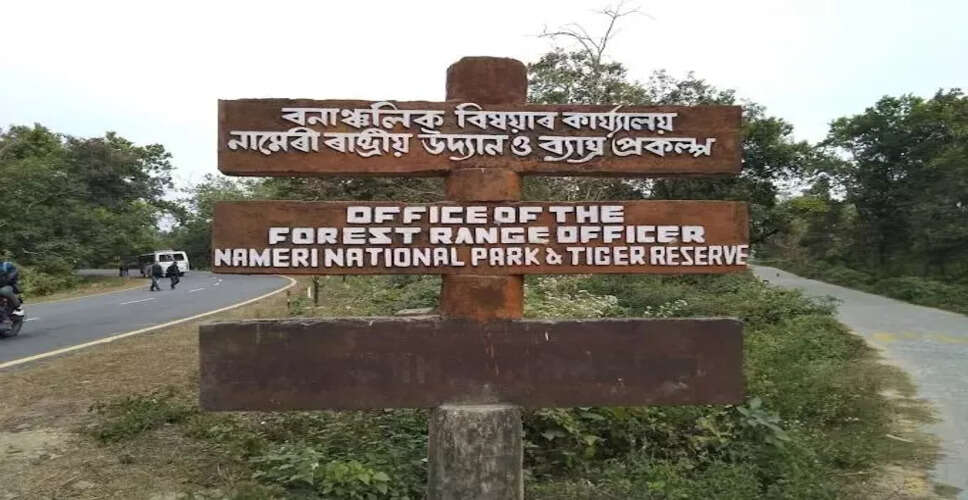

Tiger Population Surge in Nameri National Park
Photo: Officially aman/Gmaps
Guwahati, July 3: The number of tigers in Assam's Nameri National Park and Tiger Reserve has seen a remarkable rise from three in 2022 to twelve by the conclusion of 2025, as reported by the state's Forest and Environment Minister, Jayanta Malla Baruah, on Friday.
The minister highlighted this increase as a notable achievement in conservation efforts.
"The growth from merely three tigers in 2022 to twelve by the end of 2025 showcases a significant conservation success, as confirmed by the Wildlife Institute of India," Baruah stated in a message on X.
He further remarked, "The forest conservation initiatives led by Hon'ble CM @himantabiswa are yielding impressive results!"
Additionally, Baruah mentioned that two tigers have made a return to the Sonai-Rupai Wildlife Sanctuary, which serves as the satellite core of the Nameri Tiger Reserve, after being absent for decades. This marks another significant achievement in the state's wildlife conservation efforts.
The Nameri Tiger Reserve includes both Nameri National Park and the Sonai-Rupai Wildlife Sanctuary, along with the Naduar and Balipara Reserve Forests.
Nameri National Park, covering an area of 200 square kilometers, constitutes the core of the tiger reserve, while the Sonai-Rupai Wildlife Sanctuary, which spans approximately 120 square kilometers, acts as its satellite core.