
Significant Changes in Punjab's Voter List Following Electoral Roll Revision

Major Adjustments to Punjab's Voter Rolls
On Monday, the final voter list for Punjab revealed that approximately 1.36 million individuals have been removed following a thorough revision of the electoral rolls, as reported by the state Election Commission.
The total number of registered voters in Punjab has decreased to around 20.1 million, down from 21.4 million, reflecting a decline of approximately 6.3%.
Interestingly, the electorate saw an increase from 19.4 million in the draft roll published on August 13 to 20.1 million in the final version, indicating a net rise of 3.6%, according to Punjab's Chief Electoral Officer, Anindita Mitra.
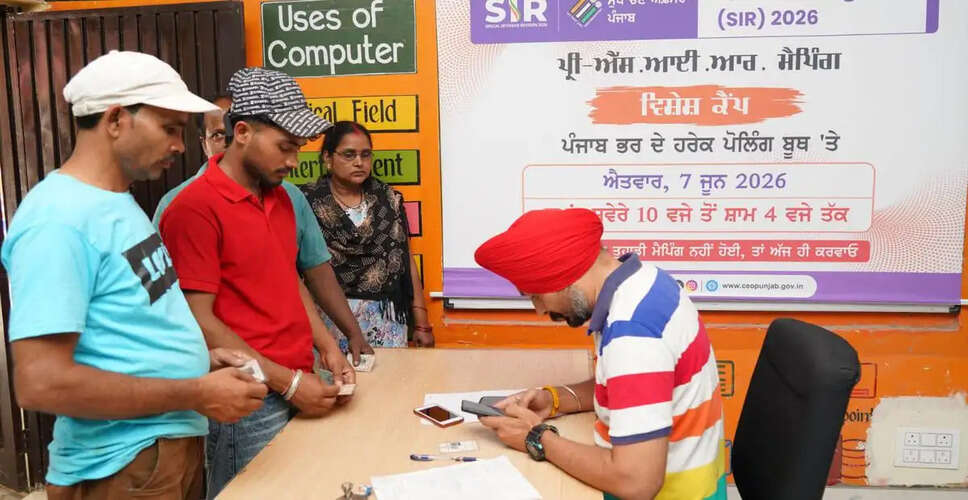
Punjab is one of 19 states and Union Territories undergoing voter roll revisions in the third phase of the Special Intensive Revision (SIR).
During the verification process, notices were sent to 3.54 million electors, with over 86,000 deemed ineligible.
The final rolls also incorporate more than 790,000 newly registered voters.
This revision process commenced on June 25, with draft rolls released on August 13, followed by a period for claims and objections until October 8.
Punjab's next state elections are anticipated to take place early next year.
The first phase of this exercise was initiated in Bihar in 2025, later expanding to 12 states and Union Territories in subsequent phases.
Concerns have emerged regarding the potential exclusion of legitimate voters from the rolls, which could influence electoral results.
In May, the Supreme Court affirmed the legality of the revision process but clarified that it does not grant the Election Commission the authority to determine an individual's citizenship status.
Despite this ruling, states governed by the Bharatiya Janata Party have utilized the SIR to deny ration cards to those removed from the rolls, and in some instances, police have refused to renew their passports.
The release of the final rolls has sparked protests from opposition parties, student organizations, and the Cockroach Janta Party, who allege irregularities in the voter deletion process and are calling for the resignation of Chief Election Commissioner Gyanesh Kumar.
Edited by Nachiket Deuskar.