
Significance of Sharad Purnima: Traditions and Beliefs

Understanding Sharad Purnima
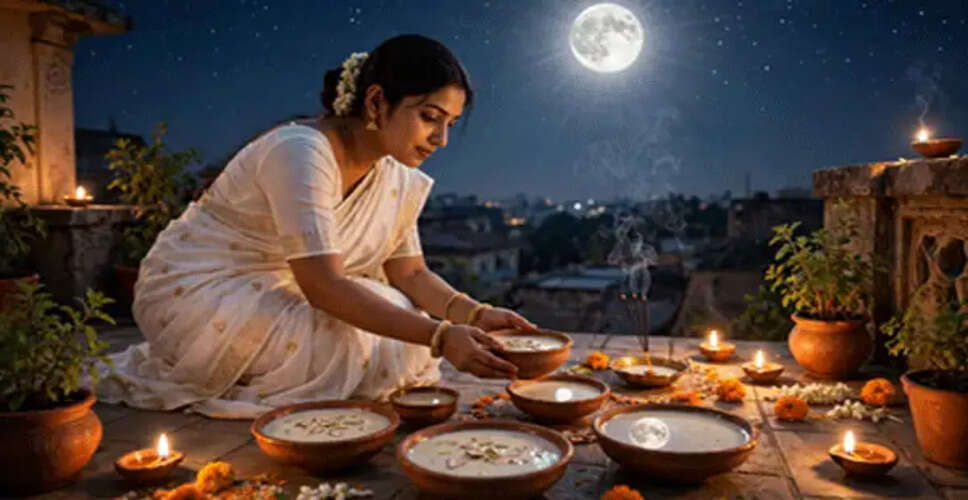
In Hinduism, Sharad Purnima holds significant religious and spiritual importance. This festival is celebrated annually on the full moon day of the Ashwin month. It is also known by various names such as Kojagari Purnima, Rasa Purnima, Kaumudi Vrat, and Kumar Purnima. According to religious beliefs, the night of Sharad Purnima is when the moon shines brightly, embodying all 16 phases of its beauty. It is believed that the moon's rays on this night possess qualities akin to nectar. Therefore, a tradition has emerged where devotees place kheer (a rice pudding) under the moonlight to absorb its blessings. This year, Sharad Purnima will be celebrated on October 25.
The full moon phase will commence on October 25 at 11:55 AM and conclude on October 26 at 9:41 AM. Given the significance of the night, the main festivities will occur on the evening of October 25.
Mythological Significance
According to mythology, it is said that on the night of Sharad Purnima, Lord Krishna performed the divine dance of Maharasa with the gopis in Vrindavan. This event symbolizes the divine love, devotion, and surrender between Lord Krishna and the gopis. Consequently, this full moon holds special significance in Vaishnav traditions, where devotees worship Lord Krishna and express their faith.
The moonlit night of Sharad Purnima is considered particularly auspicious for spiritual practices and devotion.
Rituals and Traditions
Another religious belief associated with Sharad Purnima involves Goddess Lakshmi. It is said that on this night, she roams the earth, observing who is awake and worshipping her. Devotees who stay awake and worship Goddess Lakshmi are believed to receive her special blessings, leading to prosperity and happiness in their homes. This is why the festival is also referred to as Kojagari Purnima, derived from the phrase 'Who is awake?'. On this occasion, devotees pray to Goddess Lakshmi for family well-being and abundance.
A popular tradition on Sharad Purnima is preparing kheer and placing it under the open sky. It is believed that kheer made from cow's milk and rice, when exposed to moonlight, gains special properties. The next morning, this kheer is distributed as prasad among family members and others. Many households celebrate this tradition with devotion and enthusiasm, although the belief in the medicinal properties of kheer due to moonlight is not scientifically validated.
Worship and Charity
On Sharad Purnima, special worship of Goddess Lakshmi is performed. Devotees light ghee lamps in front of her idol or picture and conduct rituals. Many people stay awake throughout the night, chanting mantras dedicated to Goddess Lakshmi and Lord Krishna. It is believed that sincere worship on this day brings peace and prosperity to the home. Offerings of flowers, fruits, sweets, and other worship materials are made during the rituals.
Additionally, the day is considered auspicious for charitable acts. It is customary to donate white clothes, rice, sugar, silver utensils, and food. Devotees help those in need according to their ability, seeking spiritual merit. Thus, Sharad Purnima is not just about moon worship or preparing kheer; it is a festival intertwined with devotion, charity, service, and family happiness. On this day, devotees pray to Goddess Lakshmi and Lord Krishna for a prosperous, peaceful, and auspicious life.