
Significance of Indian Ministers' Visits Amidst Tensions in Bangladesh
India's Diplomatic Engagement in Dhaka
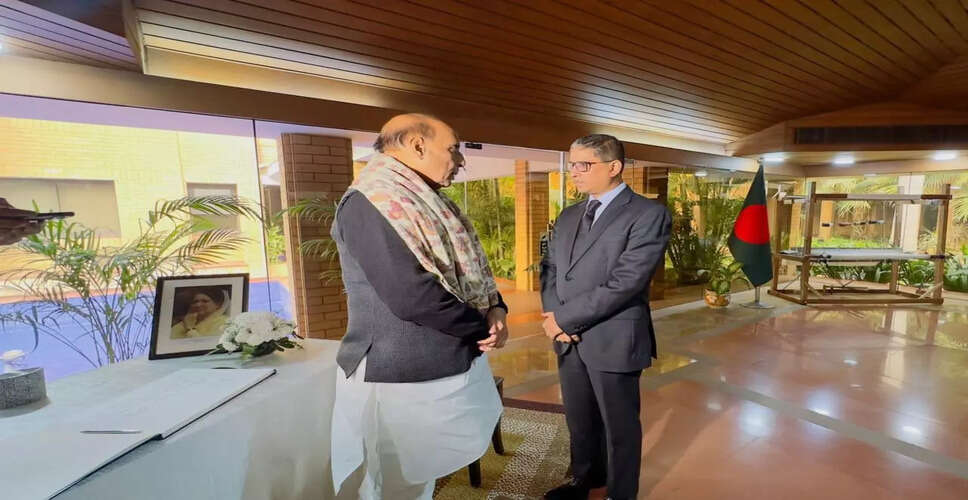
New Delhi, Jan 2: The recent trip of India's External Affairs Minister S. Jaishankar to Dhaka for the funeral of former Prime Minister Khaleda Zia, along with Defence Minister Rajnath Singh's visit to the High Commission in New Delhi, has been deemed significant by a prominent Bangladeshi newspaper.
According to an analysis by Prothom Alo, Jaishankar's brief visit to Dhaka and Singh's attendance at the Bangladesh mission highlight the importance of these diplomatic gestures.
The backdrop of this visit is the deteriorating relations between India and Bangladesh following the popular uprising on August 5, 2024, which resulted in the fall of the Awami League government and Sheikh Hasina's subsequent exile to India.
Bangladesh's High Commissioner to India, Riaz Hamidullah, expressed optimism on social media, suggesting that Jaishankar's visit could pave the way for a new chapter in the bilateral relationship.
Interestingly, Hamidullah was recalled to Dhaka on Monday amid escalating tensions between the two nations.
In his post, he noted, “As (India) Hon External Affairs Minister HE Dr @DrSJaishankar left Dhaka following a whirlwind 4-hr visit, #Bangladesh & #India would look forward to script a new chapter in (Bangladesh-India) ties, in shared interests driven by pragmatism and mutual interdependence, as indeed briefly discussed with @bdbnp78 Acting Chair, @trahmanbnp this afternoon.”
This statement referred to Jaishankar's meeting with Tarique Rahman, the son of the late Prime Minister and Acting Chairman of the Bangladesh Nationalist Party (BNP), where he delivered a condolence letter from Prime Minister Narendra Modi.
Hamidullah also acknowledged Defence Minister Singh's visit, stating, “Honoured to welcome HE @rajnathsingh, Hon (India) Defense Minister at @bdhc_delhi as he conveyed condolences of #India and paid homage to former (Bangladesh) Prime Minister | @bdbnp78 Chairperson (late) #BegumKhaledaZia, in Delhi.”
Prothom Alo's analysis aligns with the High Commissioner's sentiments, emphasizing the significance of Singh's visit to the Bangladesh High Commission to honor Khaleda Zia. It suggests that his presence indicates India's commitment to ensuring security at the mission.
However, the article did not address the rising violence in Bangladesh, particularly against Hindu minorities, where at least 12 individuals were reportedly killed in mob attacks last month. This surge in violence raises concerns about the safety of vulnerable communities and the overall stability of the nation.
The ongoing violence threatens social harmony and the democratic process, especially with elections approaching on February 12.
While authorities often treat each incident as an isolated event, the pattern reveals a troubling convergence of political instability, religious extremism, and inadequate institutional responses that leave minorities at risk. The Prothom Alo article, titled 'Delhi eager to take bilateral relations forward', reflects the uncertainty faced by Bangladeshi authorities.
When asked if Jaishankar's visit would alleviate tensions, Touhid Hossain, Adviser for Foreign Affairs of the Interim Government, suggested that the answer would unfold in the coming days, indicating a need for Dhaka to respond proactively rather than deferring responsibility.