
Should Paternity Leave Be a Legal Right in India? AAP's Raghav Chadha Makes the Case
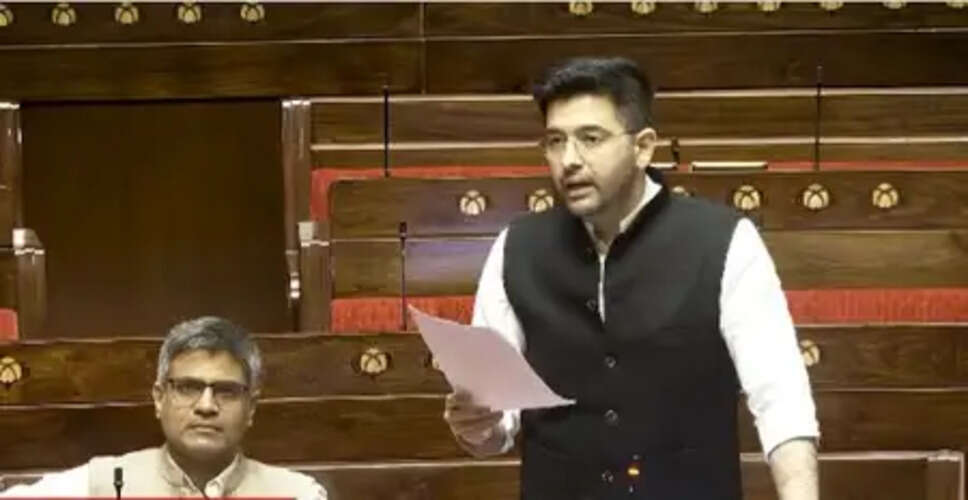
Raghav Chadha Advocates for Paternity Leave in Parliament
New Delhi: On Tuesday, Raghav Chadha, a Rajya Sabha MP from the Aam Aadmi Party (AAP), brought attention to the topic of paternity leave during a parliamentary session, advocating for it to be recognized as a legal right across all sectors in India.
Chadha described the current situation as a 'societal failure enforced by law,' emphasizing that while both parents receive congratulations upon the birth of a child, the burden of caregiving predominantly falls on mothers, with existing laws only acknowledging maternity leave.
"Fathers should not have to choose between supporting their newborn and maintaining their employment. Likewise, mothers should not have to recover from childbirth without their partner's assistance," he stated.
He highlighted that the postpartum period is critical for mothers, who need substantial support—physically, emotionally, and mentally. Chadha pointed out that after carrying a child for nine months and undergoing either a normal delivery or a cesarean section, mothers require significant recovery time and care.
"During this time, a father's presence is essential, not just a luxury. His role in caregiving for his wife is equally vital," Chadha emphasized in the House.
Chadha also noted the existing inequalities in paternity leave policies in India, mentioning that only Central government employees currently receive 15 days of paternity leave, with no mandatory provisions for the private sector.
He referenced international standards, citing countries like Sweden, Iceland, and Japan, which offer paternity leave ranging from 90 days to 52 weeks, promoting shared parental responsibilities.
Chadha pointed out that nearly 90% of India's workforce is in the private sector, effectively leaving many fathers without access to paternity leave.
He called for immediate policy changes, urging the government to legislate paternity leave as a legal entitlement.
"Caregiving should not solely rest on mothers; it is a shared duty of both parents. Our laws need to reflect this reality," he concluded.